The Alarm Stuck On: How a Rogue Immune Switch Fuels Alzheimer’s
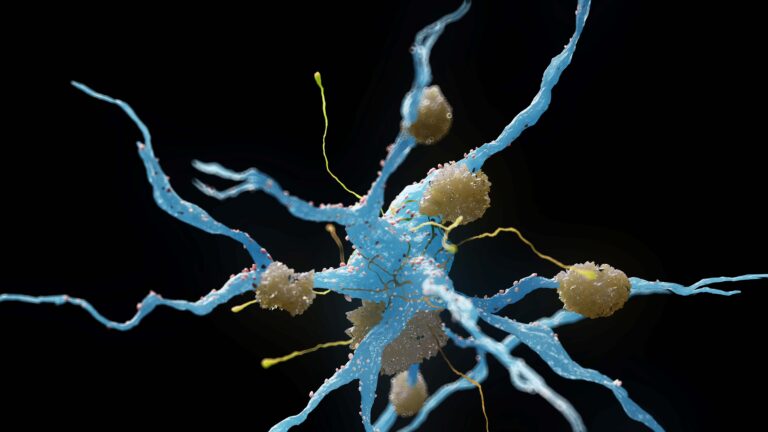
Key Takeaway: A growing body of evidence indicates that the NLRP3 inflammasome, a specific inflammatory protein complex within brain immune cells, is a central driver linking both amyloid plaques and tau tangles in Alzheimer’s disease. Targeting this molecular ‘switch’ may pave the way for next-generation therapies that go beyond clearing protein aggregates, instead calming the destructive immune response that fuels cognitive decline.
A Molecular Switch Worth Flipping
In the fight against Alzheimer’s disease, decades of drug development have focused on clearing the sticky amyloid plaques and tangled tau proteins that accumulate in patients’ brains. The results have been modest, at best. But what if the primary culprit isn’t the buildup itself, but the brain’s own immune system overreacting to it? A critical inflammatory ‘switch’ inside the brain’s resident immune cells is emerging as one of the most promising therapeutic targets in modern neuroscience. Its name is the NLRP3 inflammasome, and a comprehensive new review presents compelling evidence that it sits at the very heart of Alzheimer’s pathology.
What the Review Reveals
This synthesis consolidates evidence from human brain tissue, cerebrospinal fluid analysis, and animal models to build a holistic picture of how the NLRP3 inflammasome drives Alzheimer’s disease. The findings are striking in their consistency: across all these data sources, abnormal activation of the NLRP3 inflammasome appears as a reliable feature of Alzheimer’s pathology[1]. The review identifies microglia, the brain’s specialized immune cells, as the primary cell type responsible for this inflammasome-driven damage. It also catalogs emerging therapies that directly target NLRP3 components, as well as repurposed existing drugs and natural compounds that appear to modulate this pathway.
What makes this review particularly significant is that it connects two pathological features that researchers often study in isolation. NLRP3 activation is tightly linked not only to amyloid-beta deposition but also to tau pathology and measurable cognitive decline. This suggests the inflammasome isn’t a bystander but a central amplifier—an ‘epicenter’—that takes an initial insult and transforms it into widespread neurodegeneration.
The Mechanism: How the Brain’s Immune System Turns Against Itself
To understand why this matters, it helps to know what the NLRP3 inflammasome actually does. The term ‘inflammasome’ refers to a multi-protein complex that assembles inside cells when they sense danger signals. Think of it as a molecular alarm system. Under normal circumstances, the NLRP3 inflammasome is a valuable defender. It detects invading pathogens and damaged cellular components, then triggers the release of potent inflammatory molecules—chiefly interleukin-1 beta (IL-1β) and interleukin-18 (IL-18)—that call in additional immune resources to the problem area[2].
The problem arises when this alarm gets stuck in the ‘on’ position. In Alzheimer’s disease, misfolded amyloid-beta peptides accumulate outside neurons and are recognized as a danger signal by microglia. The microglia attempt to engulf and clear these aggregates via phagocytosis, but they become overwhelmed by the sheer quantity. Frustrated, the microglia activate their NLRP3 inflammasomes, unleashing a cascade of IL-1β and IL-18 that creates a chronically inflamed brain environment[3]. This perpetual inflammation doesn’t just fail to solve the problem; it actively makes it worse.
Research has shown that the IL-1β released by activated microglia encourages more amyloid-beta production in neurons and accelerates the phosphorylation of the tau protein—the process that leads to the neurofibrillary tangles characteristic of Alzheimer’s[4]. The inflammasome also triggers a particularly destructive form of cell death called pyroptosis, where cells essentially burst open, spilling their inflammatory contents into the surrounding tissue and perpetuating the cycle[5]. The result is a vicious cycle: amyloid triggers inflammation, inflammation accelerates both amyloid and tau pathology, and the brain progressively loses neurons it cannot replace.
Microglia are uniquely positioned in this story. Unlike peripheral immune cells, they are long-lived residents of the central nervous system, arising from yolk sac progenitors during embryonic development and persisting for a lifetime[6]. When they switch from a protective, surveillant state to a chronically activated, pro-inflammatory phenotype, the consequences are felt over years, not hours.
The Bottom Line: What This Means for Tomorrow’s Patients
For the millions of families worldwide affected by Alzheimer’s, the identification of NLRP3 as a central therapeutic target offers a real reason for optimism. The logic is straightforward: if you can quiet the inflammasome without completely disabling the brain’s immune defenses, you can break the feedback loop that drives the disease’s progression.
Several small-molecule NLRP3 inhibitors are already in preclinical and early clinical development. The most widely studied, MCC950, has demonstrated the ability to reduce amyloid burden, limit tau pathology, and improve cognitive performance in mouse models of Alzheimer’s[7]. Meanwhile, existing drugs, including certain anti-diabetic agents and anti-inflammatory compounds, are being investigated for their potential to modulate NLRP3 activity, potentially speeding the path to clinical use through drug repurposing strategies.
The conceptual shift here is profound. Instead of viewing Alzheimer’s as solely a protein misfolding disease, the scientific community is increasingly recognizing it as a disease of immune dysregulation—a condition where the brain’s own defense system becomes its greatest liability. Targeting the NLRP3 inflammasome intervenes at this fundamental cause in a way that amyloid-clearing antibodies alone cannot.
However, significant caveats remain. Most of the therapeutic evidence thus far comes from animal models, and the history of Alzheimer’s research is littered with treatments that worked beautifully in mice but failed in humans. The inflammasome also plays essential roles in fighting genuine infections, so any drug that suppresses it must do so with precision to avoid leaving patients immunologically vulnerable. Additionally, Alzheimer’s is a complex, multifactorial disease, and it’s unlikely that any single target will offer a complete cure.
Still, it is hard to ignore the convergence of evidence. When human tissue studies, cerebrospinal fluid biomarkers, and animal experiments all point to the same molecular pathway, the scientific community takes notice. The NLRP3 inflammasome may not be the whole story of Alzheimer’s disease, but it is increasingly clear that it is a chapter we can no longer afford to skip.
Scientific Sources
- Lian W, et al. Targeting the NLRP3 Inflammasome in Alzheimer’s Disease: Mechanistic Insights and Therapeutic Advances. Ageing research reviews. 2026:103273. PubMed: https://pubmed.ncbi.nlm.nih.gov/42501950/
- Schroder K, Tschopp J. The inflammasomes. Cell. 2010. DOI: 10.1016/j.cell.2010.01.040
- Heneka MT, et al. NLRP3 is activated in Alzheimer’s disease and contributes to pathology in APP/PS1 mice. Nature. 2013. DOI: 10.1038/nature11729
- Ising C, et al. NLRP3 inflammasome activation drives tau pathology. Nature. 2019. DOI: 10.1038/s41586-019-1769-z
- Shi J, et al. Cleavage of GSDMD by inflammatory caspases determines pyroptotic cell death. Nature. 2015. DOI: 10.1038/nature15514
- Ginhoux F, et al. Fate mapping analysis reveals that adult microglia derive from primitive macrophages. Science. 2010. DOI: 10.1126/science.1194637
- Dempsey C, et al. Inhibiting the NLRP3 inflammasome with MCC950 promotes non-phlogistic clearance of amyloid-β and reduces tau pathology. Brain Behav Immun. 2017. DOI: 10.1016/j.bbi.2016.12.014
Medically reviewed by
Dr. Şekip Altunkan
Dr. Şekip Altunkan is an internal medicine specialist with extensive clinical experience. He trained at Hacettepe University Faculty of Medicine and later served as an Associate Professor in Internal Medicine. He founded and led the Metropol Internal Medicine and Hypertension Clinic in Ankara, pioneering non-invasive Electron Beam Tomography (EBT) cardiac imaging, arterial-stiffness measurement, and nationwide Holter monitoring. He currently practices at his private clinic in Ankara, focusing on hypertension, vascular health, cholesterol, diabetes and heart disease. He has published widely in national and international journals, serves as a peer reviewer for several international journals, and is the author of the book "Questions and Answers on Hypertension."