Loosening the Grip: Aficamten Tackles Nonobstructive HCM
✓Medically Reviewed by Dr. Şekip Altunkan on Oct 20, 2026.
Key Takeaway:In a Phase 3 clinical trial enrolling 517 patients, the oral cardiac myosin inhibitor aficamten achieved comprehensive clinical improvement in 53% of individuals with nonobstructive hypertrophic cardiomyopathy, compared to just 14% in the placebo group. In a disease phenotype historically lacking any approved targeted therapies, these findings suggest that directly targeting the hyperdynamic motor apparatus of the myocardium can help patients breathe more easily, move with greater freedom, and reclaim their quality of life.
Why This Matters: A Disease Without Targeted Therapies
Imagine a 48-year-old teacher who once spent weekends hiking mountain trails. Today, climbing a single flight of stairs leaves her gasping for breath. An echocardiogram reveals that her left ventricular wall has thickened to nearly double its normal dimension, yet there is no physical blockage obstructing the outflow of blood from the heart. Her cardiologist can prescribe medications to slow her heart rate and take the edge off her symptoms, but cannot offer a therapy that addresses the fundamental pathophysiology driving the disease; until now, no such agent existed in the armamentarium of modern medicine.
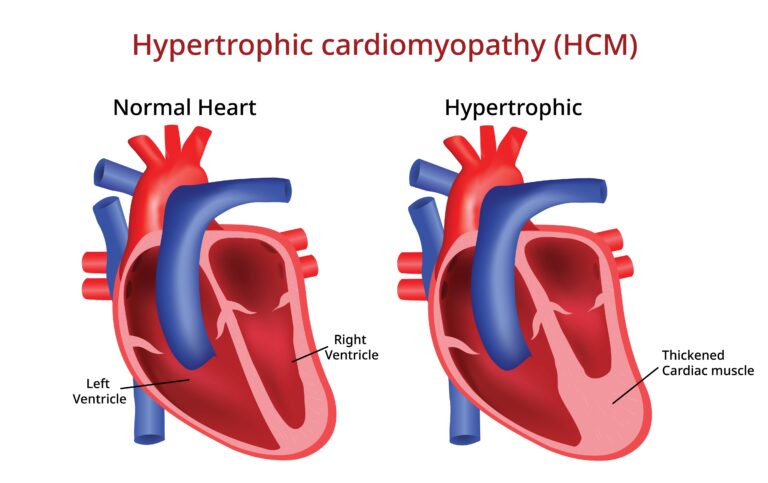
Underlying this presentation is hypertrophic cardiomyopathy (HCM), a genetic disorder defined by abnormal thickening of the myocardium. The modern clinical description of the disease dates back to 1958, when London pathologist Donald Teare documented unexplained, asymmetric myocardial hypertrophy in young adults who had died suddenly and unexpectedly[2]. Far from a rare anomaly, HCM affects approximately 1 in 500 individuals, with estimates rising to as high as 1 in 200 when milder genetic phenotypes are taken into account[3].
Clinicians broadly categorize HCM into two main phenotypes. In obstructive HCM, the thickened muscular wall physically impedes the left ventricular outflow tract, and interventions that relieve this mechanical gradient provide profound clinical benefit. In nonobstructive HCM, however, there is no mechanical obstruction to relieve. Clinical guidelines have historically relied on beta-blockers and…
ŞA
Medically reviewed by
Dr. Şekip Altunkan
Dr. Şekip Altunkan is an internal medicine specialist with extensive clinical experience. He trained at Hacettepe University Faculty of Medicine and later served as an Associate Professor in Internal Medicine. He founded and led the Metropol Internal Medicine and Hypertension Clinic in Ankara, pioneering non-invasive Electron Beam Tomography (EBT) cardiac imaging, arterial-stiffness measurement, and nationwide Holter monitoring. He currently practices at his private clinic in Ankara, focusing on hypertension, vascular health, cholesterol, diabetes and heart disease. He has published widely in national and international journals, serves as a peer reviewer for several international journals, and is the author of the book "Questions and Answers on Hypertension."