#hypertension_vascular_health

Reading the Aging Vessel Lining, One Cell at a Time
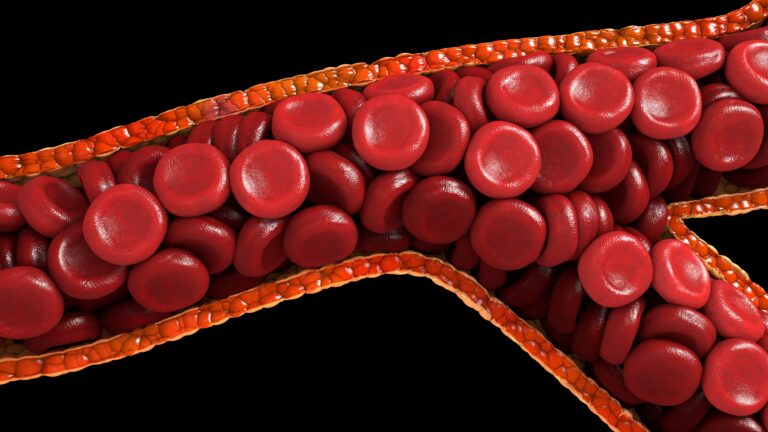
Medically Reviewed by Dr. Şekip Altunkan on Oct 25, 2026.
Medical illustration from Vitals Daily

Key Takeaway

An atlas of more than 375,000 endothelial cells drawn from 12 human tissues shows that the inner lining of our blood vessels ages along recognizable molecular paths. Venous cells lose activity in genes that build new vessels, programs governing the vessel scaffold and force sensing shift broadly, and a p21-linked gene program ties aging endothelium to cellular senescence.

The Lining Nobody Sees Growing Old

Consider a 78-year-old woman recovering from hip surgery. Her incision is slow to close, her ankles swell by evening, and her blood pressure has crept upward over the past decade. Her chart files these under three different headings. Biology might file them under one: the endothelium, a lining 1 cell thick that coats every artery, vein and capillary in the body and, laid flat, would cover thousands of square meters.

That lining is far more than a pipe coating. It releases nitric oxide to relax vessels, controls what leaks into tissues, steers immune cells and sprouts new capillaries when tissue needs repair. Age is the single strongest risk…

Medically reviewed by

Dr. Şekip Altunkan

Dr. Şekip Altunkan is an internal medicine specialist with extensive clinical experience. He trained at Hacettepe University Faculty of Medicine and later served as an Associate Professor in Internal Medicine. He founded and led the Metropol Internal Medicine and Hypertension Clinic in Ankara, pioneering non-invasive Electron Beam Tomography (EBT) cardiac imaging, arterial-stiffness measurement, and nationwide Holter monitoring. He currently practices at his private clinic in Ankara, focusing on hypertension, vascular health, cholesterol, diabetes and heart disease. He has published widely in national and international journals, serves as a peer reviewer for several international journals, and is the author of the book "Questions and Answers on Hypertension."

Share this article