#longevity_healthy_aging

Rogue Blood Cells and the Aging Eye: The CHIP Connection
Medically Reviewed by Dr. Şekip Altunkan on Nov 22, 2026.
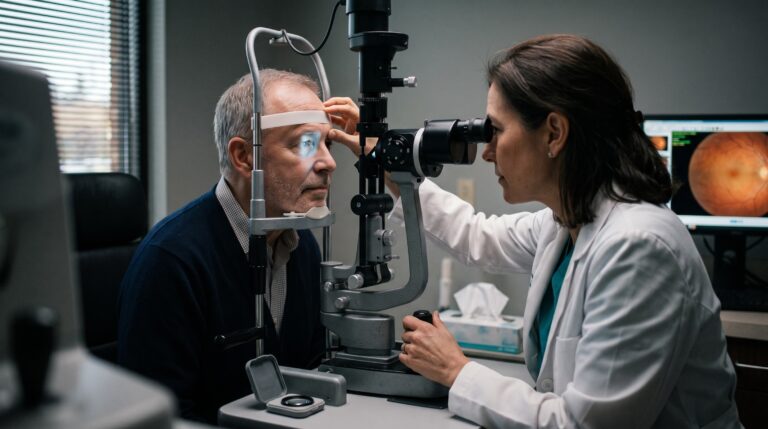
Ophthalmologist examining an older man's eyes at a slit lamp in a dimly lit eye clinic

AI-generated image · VitalsDaily

Key Takeaway

In a study analyzing 436,469 adults followed for a median of 14.4 years, individuals harboring an age-related mutation in their blood stem cells known as CHIP faced a modestly higher risk of cataracts and macular degeneration. Among individuals with diabetes, CHIP emerged as the strongest signal in the analysis, linked to a 48% increased risk of diabetic retinopathy.

A Hidden Clone in Circulation and the Toll on the Eye

Consider a 62-year-old man with type 2 diabetes who has done virtually everything right. His blood sugar is reasonably controlled, his blood pressure is treated, and he never misses an annual dilated eye exam. Then, one spring afternoon, his ophthalmologist detects microaneurysms and leaking vessels scattered across his retina. Nothing in his clinical chart adequately explains why his eyes appear to be aging far faster than his routine laboratory markers would suggest.

Part of the explanation may reside not in his eyes, but in his bone marrow. As we age, the stem cells responsible for producing our blood…

Medically reviewed by

Dr. Şekip Altunkan

Dr. Şekip Altunkan is an internal medicine specialist with extensive clinical experience. He trained at Hacettepe University Faculty of Medicine and later served as an Associate Professor in Internal Medicine. He founded and led the Metropol Internal Medicine and Hypertension Clinic in Ankara, pioneering non-invasive Electron Beam Tomography (EBT) cardiac imaging, arterial-stiffness measurement, and nationwide Holter monitoring. He currently practices at his private clinic in Ankara, focusing on hypertension, vascular health, cholesterol, diabetes and heart disease. He has published widely in national and international journals, serves as a peer reviewer for several international journals, and is the author of the book "Questions and Answers on Hypertension."

Share this article