Colchicine’s Hidden Signal in Stroke Prevention
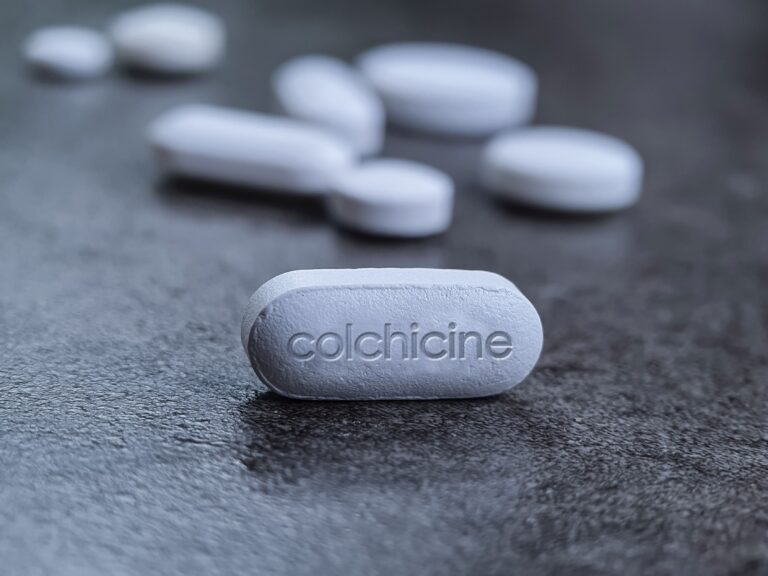
Key Takeaway: A post-hoc analysis of the CONVINCE trial found that colchicine did not significantly prevent heart attacks and strokes overall in patients who had a stroke. However, among patients whose strokes were due to atherosclerosis and who adhered to the medication, colchicine reduced the risk of major cardiovascular events by 24%. This finding is hypothesis-generating, not definitive proof, but it signals that anti-inflammatory stroke prevention strategies may be tailored to the right patients in the future.
A Drug That Works—But Only in the Right Patient
When a major clinical trial ends with a “neutral” result—meaning the tested drug fails to outperform a placebo—the tendency is to close the book and move on. Yet some of medicine’s most important breakthroughs can lie hidden within the data of these neutral studies. The anti-inflammatory drug colchicine, an ancient remedy derived from the autumn crocus, recently failed to prevent heart attacks and strokes in a broad population of patients who had recently had a stroke. A closer look at the data, however, reveals something more interesting than failure: a signal that colchicine may work powerfully in a specific subgroup of patients, particularly those whose strokes are caused by atherosclerosis—the slow buildup of inflammatory plaques within the arteries.
What the Researchers Did
The CONVINCE trial was a randomized, controlled study involving 3,144 patients who had recently experienced a stroke or a transient ischemic attack (a “mini-stroke”). Participants were randomized to receive either low-dose colchicine (0.5 mg daily) or a placebo, and researchers followed them for major adverse cardiovascular events (often abbreviated as MACE, a composite endpoint of heart attack, stroke, or death from cardiovascular causes).
The trial’s overall result was neutral: colchicine did not significantly reduce the risk of MACE in the entire study population. But the investigators had a hypothesis worth testing. Not all strokes are the same. Some are caused by blood clots from the heart (cardioembolic strokes), and others arise from disease in the brain’s small blood vessels. A distinct subset—and the type where inflammation plays the most prominent role—is caused by atherosclerosis in the large arteries supplying the brain. Acting on this, the researchers stratified the 3,144 patients based on the presence of underlying atherosclerosis and re-analyzed the data.
The Findings
In the primary intention-to-treat analysis, which includes every patient randomized regardless of whether they took the drug, colchicine did not significantly reduce the risk of MACE in the atherosclerosis subgroup (hazard ratio 0.83; 95% confidence interval 0.64–1.07)[1]. The formal test for interaction between the treatment effect and atherosclerosis status was also not significant (Pinteraction = 0.60), meaning the statistical evidence for a true subgroup difference was weak.
But this is where the story gains nuance. In a pre-planned on-treatment analysis, which only counts patients who actually adhered to colchicine, the drug did significantly reduce the risk of MACE in the atherosclerosis group (hazard ratio 0.76; 95% confidence interval 0.58–0.99). This corresponds to a 24% relative risk reduction. In patients without atherosclerosis, no such benefit was observed.
The Mechanism: Why Inflammation Matters in Atherosclerotic Stroke
To understand why colchicine might help specifically in atherosclerosis, it’s essential to grasp what an atherosclerotic plaque actually is. It is not just a passive buildup of cholesterol. A mature plaque is a dynamic, inflamed lesion teeming with immune cells—especially macrophages and neutrophils—that secrete enzymes and inflammatory molecules capable of destabilizing the plaque’s fibrous cap[2]. When that cap ruptures, a blood clot forms on the exposed surface and can occlude an artery supplying the brain, causing a stroke.
Colchicine intervenes in this process at several points. It binds to tubulin, a structural protein within cells, and inhibits the assembly of microtubules, which immune cells need to migrate to sites of inflammation[3]. It also suppresses the NLRP3 inflammasome, a molecular complex within macrophages that initiates the release of interleukin-1β, one of the most potent drivers of vascular inflammation[4]. The landmark CANTOS trial showed that blocking interleukin-1β with a monoclonal antibody reduced cardiovascular events in patients with a prior heart attack, providing proof of concept that targeting inflammation, independent of cholesterol lowering, can prevent vascular catastrophes[5].
The benefit of colchicine in coronary artery disease has already been established. The COLCOT and LoDoCo2 trials demonstrated that low-dose colchicine reduces cardiovascular events in patients with stable coronary disease or a recent heart attack[6][7]. These were populations with established atherosclerosis. The CONVINCE subgroup analysis now suggests the same principle may extend to the cerebrovascular domain, but only when the stroke mechanism is atherosclerotic rather than cardioembolic or small vessel disease.
Limitations: A Subgroup Analysis Does Not Change Clinical Practice
It would be irresponsible to overstate these findings. This is a post-hoc subgroup analysis, not a prospectively designed study. The primary intention-to-treat analysis was neutral, and the test for interaction did not reach significance. The on-treatment analysis, though pre-planned, is inherently prone to bias: patients who stick with a drug may be systematically different from those who stop it—healthier, more motivated, or with fewer side effects. Adherence itself may be a marker of overall health behaviors rather than a pure effect of the drug. Additionally, the confidence interval for the hazard ratio in the on-treatment analysis barely crossed the threshold of significance (upper bound 0.99), meaning the result is fragile.
Conclusion: What the Findings Mean for the Future
This analysis does not prove that colchicine prevents stroke in patients with atherosclerosis. What it does is sharpen a hypothesis for the next generation of trials to test. The overall neutral result of CONVINCE may have been diluted by including patients whose strokes were unrelated to arterial inflammation—that is, patients for whom there was no biological reason for colchicine to help. If future trials are enriched by selecting patients with confirmed large-artery atherosclerosis, and if those trials incorporate strategies to support medication adherence, the signal seen here might become a definitive answer.
For patients having a stroke today, the practical message is clear. If your stroke was caused by an atherosclerotic plaque, the conversation about anti-inflammatory therapy is no longer theoretical but coming into focus. Colchicine is inexpensive, widely available, and has a well-known safety profile from decades of use in treating gout, familial Mediterranean fever (FMF), and pericarditis. The missing piece is a dedicated, adequately powered trial in the right population. Until that trial is done, this subgroup analysis serves as a powerful compass, pointing the field where to look next.
Scientific Sources
- McCabe JJ, et al. Colchicine for Secondary Prevention After Stroke According to the Presence of Atherosclerosis. Stroke. 2026. PubMed: https://pubmed.ncbi.nlm.nih.gov/42619594/
- Libby P, et al. Inflammation and atherosclerosis. Circulation. 2002. DOI: 10.1161/hc0902.104353
- Leung YY, et al. Colchicine — update on mechanisms of action and therapeutic uses. Semin Arthritis Rheum. 2015. DOI: 10.1016/j.semarthrit.2015.06.013
- Martinon F, et al. The inflammasome: a molecular platform triggering activation of inflammatory caspases and processing of proIL-beta. Mol Cell. 2002. DOI: 10.1016/s1097-2765(02)00599-3
- Ridker PM, et al. Antiinflammatory therapy with canakinumab for atherosclerotic disease. N Engl J Med. 2017. DOI: 10.1056/NEJMoa1707914
- Tardif JC, et al. Efficacy and safety of low-dose colchicine after myocardial infarction. N Engl J Med. 2019. DOI: 10.1056/NEJMoa1912388
- Nidorf SM, et al. Colchicine in patients with chronic coronary disease. N Engl J Med. 2020. DOI: 10.1056/NEJMoa2021372
Medically reviewed by
Dr. Şekip Altunkan
Dr. Şekip Altunkan is an internal medicine specialist with extensive clinical experience. He trained at Hacettepe University Faculty of Medicine and later served as an Associate Professor in Internal Medicine. He founded and led the Metropol Internal Medicine and Hypertension Clinic in Ankara, pioneering non-invasive Electron Beam Tomography (EBT) cardiac imaging, arterial-stiffness measurement, and nationwide Holter monitoring. He currently practices at his private clinic in Ankara, focusing on hypertension, vascular health, cholesterol, diabetes and heart disease. He has published widely in national and international journals, serves as a peer reviewer for several international journals, and is the author of the book "Questions and Answers on Hypertension."