A Precautionary Look at Amyloid-Beta and Blood Safety
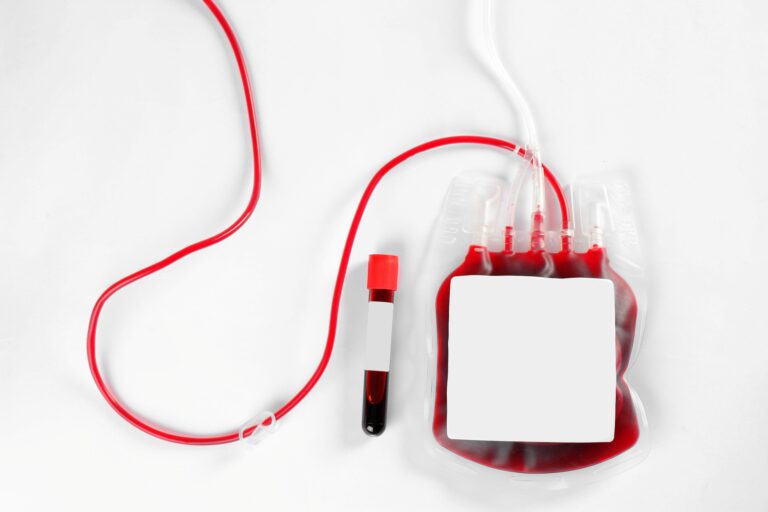
Key Takeaway: A Viewpoint article in The Lancet raises a provocative yet still theoretical concern: the misfolded amyloid-beta proteins that cause Alzheimer’s disease and cerebral amyloid angiopathy may be transmissible through blood products under certain conditions. While the risk appears exceedingly low, scientists are calling for targeted research now to safeguard the global blood supply before any cases emerge.
An Uncomfortable Question
In 2015, a research team from University College London made a discovery that sent quiet tremors through the neuroscience community. They found Alzheimer’s-like amyloid-beta deposits in the brains of relatively young individuals who had died of Creutzfeldt-Jakob disease (CJD). Decades earlier, these individuals had received injections of human growth hormone derived from cadaveric pituitary glands[2]. The hormone batches had been contaminated with the prions that cause CJD. But the amyloid-beta deposits were a different and unexpected finding. It appeared that amyloid-beta, the sticky protein that accumulates in the brains of Alzheimer’s patients, had been unwittingly transferred along with the prions.
This finding opened a new and deeply unsettling line of inquiry. If amyloid-beta pathology could be transmitted through contaminated medical products, could it also be transmitted through a far more common route: blood transfusion?
Breaking Down the Viewpoint
A recent Viewpoint article published in The Lancet tackles this question head-on, synthesizing the growing body of evidence for iatrogenic—that is, medically induced—transmission of amyloid-beta pathology and asking what it could mean for the safety of the world’s blood supply[1]. This is not a traditional research paper with a control group and outcome data; it is a carefully reasoned expert analysis that draws parallels between amyloid-beta and the prion diseases that forced blood services to overhaul their safety protocols.
The authors review several converging lines of evidence. First, the confirmed cases of iatrogenic amyloid-beta transmission via contaminated cadaver-derived growth hormone. Second, the biological similarities between amyloid-beta and prion proteins—both are misfolded proteins that can induce normal proteins to adopt their own pathological shape. Third, and perhaps most provocative, are recent epidemiological data suggesting that the risk of hemorrhage, a hallmark of cerebral amyloid angiopathy (CAA), may be statistically linked between blood donors and recipients, hinting at a possible blood-based transmission route.
The Mechanism: Why Misfolded Proteins Act Like Seeds
To understand why this concern is biologically plausible, one needs to know how amyloid-beta damages the brain. In Alzheimer’s disease, amyloid-beta peptides—small protein fragments that are normally cleared from the brain—misfold and aggregate into insoluble plaques that disrupt neuronal communication and trigger inflammation[3]. In cerebral amyloid angiopathy, these same proteins accumulate along the walls of the brain’s blood vessels, weakening them and increasing the risk of hemorrhagic stroke[4].
What makes this particularly concerning is the concept of protein aggregation by “seeding.” Prion diseases like CJD and bovine spongiform encephalopathy (mad cow disease) work in precisely this way: a single misfolded prion protein can act as a template, converting normal proteins into the disease-causing form in a self-propagating chain reaction[5]. Laboratory studies have shown that amyloid-beta can behave similarly. When animal models are given synthetic or brain-derived amyloid-beta seeds, it accelerates the formation of plaques and vascular amyloid deposits[6].
Amyloid-beta is not confined to the brain. It circulates in blood plasma and is carried by platelets. This is what makes the transfusion question so urgent. During the variant CJD crisis of the late 1990s and early 2000s, it became clear that prion proteins could be transmitted through blood transfusions, leading to a few confirmed cases in the United Kingdom and prompting sweeping changes to donor eligibility criteria[7]. The authors of the Lancet Viewpoint argue that the amyloid-beta question deserves the same level of proactive scrutiny—before cases are confirmed, not after.
Key Limitations
It is crucial to put this issue in perspective. The risk of amyloid-beta transmission via blood transfusion is theoretical. To date, no confirmed case of Alzheimer’s disease or CAA has been definitively linked to a blood transfusion. The epidemiological signal linking hemorrhage risk between donors and recipients is intriguing but far from conclusive—it could reflect shared lifestyle factors, confounders, or statistical noise rather than true biological transmission.
Furthermore, even if tiny amounts of amyloid-beta seeds are present in blood, it is unclear if they would survive processing, reach the brain in sufficient quantities, or overcome the body’s natural clearance mechanisms to cause disease. The incubation period for such a transmission pathology could be extraordinarily long—potentially decades—making it extremely difficult to study in human populations. This Viewpoint is not an alarm bell signaling imminent danger, but a call for research.
Conclusion: Implications for the Future
For anyone who has received or may need a blood transfusion, the immediate practical message is one of reassurance balanced with scientific humility. Blood transfusions remain one of the safest and most life-saving interventions in modern medicine. There is nothing in this Viewpoint to suggest that patients should avoid transfusions or that the current blood supply is unsafe.
What the article does imply is that the scientific and public health communities do not have the luxury of complacency. The history of variant CJD provides a sobering lesson: by the time bloodborne transmission was confirmed, people had already been exposed. The authors make a compelling case that now is the time to investigate this question—while the risk is still theoretical and policy changes can be proactive, not reactive.
Priority research areas include developing sensitive assays to detect amyloid-beta seeds in blood products, conducting large-scale epidemiological studies to track long-term neurological outcomes in transfusion recipients, and experimentally clarifying persistent uncertainties about whether current blood processing methods, like leukoreduction which removes white blood cells, are effective at reducing the amyloid-beta seed load. For the millions who depend on blood products and the millions who generously donate, these are questions worth answering with rigor and urgency.
Scientific Sources
- Banerjee G, et al. Risk of transmission of amyloid β pathology via transfused blood products. Lancet (London, England). 2026;408(10556):753-760. PubMed: https://pubmed.ncbi.nlm.nih.gov/42624157/
- Jaunmuktane Z, et al. Evidence for human transmission of amyloid-β pathology and cerebral amyloid angiopathy. Nature. 2015. DOI: 10.1038/nature15369
- Hardy J, Selkoe DJ. The amyloid hypothesis of Alzheimer’s disease: progress and problems on the road to therapeutics. Science. 2002. DOI: 10.1126/science.1072994
- Viswanathan A, Greenberg SM. Cerebral amyloid angiopathy in the elderly. Ann Neurol. 2011. DOI: 10.1002/ana.22516
- Prusiner SB. Prions. Proc Natl Acad Sci U S A. 1998. DOI: 10.1073/pnas.95.23.13363
- Meyer-Luehmann M, et al. Exogenous induction of cerebral beta-amyloidogenesis is governed by agent and host. Science. 2006. DOI: 10.1126/science.1131864
- Llewelyn CA, et al. Possible transmission of variant Creutzfeldt-Jakob disease by blood transfusion. Lancet. 2004. DOI: 10.1016/S0140-6736(04)15486-X
Medically reviewed by
Dr. Şekip Altunkan
Dr. Şekip Altunkan is an internal medicine specialist with extensive clinical experience. He trained at Hacettepe University Faculty of Medicine and later served as an Associate Professor in Internal Medicine. He founded and led the Metropol Internal Medicine and Hypertension Clinic in Ankara, pioneering non-invasive Electron Beam Tomography (EBT) cardiac imaging, arterial-stiffness measurement, and nationwide Holter monitoring. He currently practices at his private clinic in Ankara, focusing on hypertension, vascular health, cholesterol, diabetes and heart disease. He has published widely in national and international journals, serves as a peer reviewer for several international journals, and is the author of the book "Questions and Answers on Hypertension."