#uncategorized

The Plaque Warning Hiding in Your Routine Blood Count
Medically Reviewed by Dr. Şekip Altunkan on Nov 12, 2026.
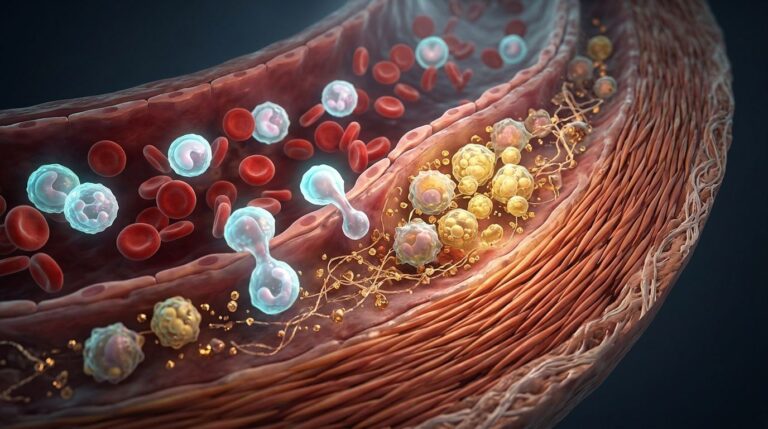
Illustration: Vitalsdaily

Key Takeaway

In a 6-year imaging study of 3,471 symptom-free, middle-aged adults, a higher white blood cell count was linked to substantially more plaque in the arteries, an effect comparable to that of LDL cholesterol and systolic blood pressure. The widely used inflammation test hs-CRP did not predict plaque. A cheap, routine blood count may be carrying a warning that most of us have never been taught to read.

The Number Nobody Circled

Picture a 45-year-old project manager at his annual physical. He runs on weekends and sleeps badly. His cholesterol is “a little high, nothing to worry about.” His blood pressure is 128 over 82. Buried on page 2 of his lab report is his white blood cell count. It sits near the upper edge of normal. Nobody comments on it, because by every conventional standard there is nothing to say.

Meanwhile, in the arteries of his neck and groin, something is building. For a large share of people, the first symptom of atherosclerosis, the slow buildup of fatty plaque inside artery walls, is a heart attack or a stroke. New research suggests…

Medically reviewed by

Dr. Şekip Altunkan

Dr. Şekip Altunkan is an internal medicine specialist with extensive clinical experience. He trained at Hacettepe University Faculty of Medicine and later served as an Associate Professor in Internal Medicine. He founded and led the Metropol Internal Medicine and Hypertension Clinic in Ankara, pioneering non-invasive Electron Beam Tomography (EBT) cardiac imaging, arterial-stiffness measurement, and nationwide Holter monitoring. He currently practices at his private clinic in Ankara, focusing on hypertension, vascular health, cholesterol, diabetes and heart disease. He has published widely in national and international journals, serves as a peer reviewer for several international journals, and is the author of the book "Questions and Answers on Hypertension."

Share this article