Circadian Rhythm and Stimulants: The Harmony of the Biological Clock with Heart Health
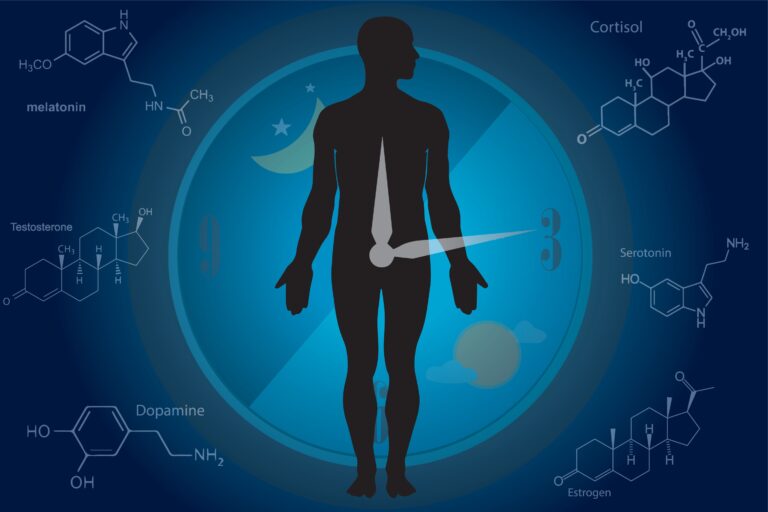
Key Takeaway: Modern chronobiology establishes that the human cardiovascular system operates under a strict “Master Clock” governed by the suprachiasmatic nucleus, where cellular repair and vascular integrity depend on the synchronized dance of daytime cortisol and nighttime melatonin. Disrupting this circadian rhythm—through nighttime blue light exposure, late-evening stimulant consumption, or late-night snacking (chrono-nutrition violations)—suppresses melatonin’s endogenous antioxidant protection, traps the autonomic nervous system in a low-Heart Rate Variability (HRV) sympathetic state, and creates a volatile “non-dipper” blood pressure profile where the heart is deprived of its nocturnal rest. Clinical and epidemiological data confirm that aligning lifestyle habits with natural light-dark cycles, restricting food intake to daylight hours via Time-Restricted Eating, and maintaining a consistent 7-to-9-hour sleep window are essential, non-pharmacological pillars required to prevent systemic hypertension, endothelial damage, and acute early-morning cardiometabolic events.
Introduction: The Invisible Conductor of the Body
The universe has a rhythm; day follows night, and the seasons follow one another. Throughout millions of years of evolution, the human body has perfectly adapted to this cycle of light and darkness. Within every one of our cells, a “Master Clock” is etched into our DNA. Deep within our brain, in the hypothalamus, the Suprachiasmatic Nucleus (SCN) acts as the conductor of this massive orchestra.
However, the modern world—with its artificial lights, night shifts, and midnight snacks—has snatched the baton from this conductor’s hand. Today, we know that a disrupted circadian rhythm is not just about insomnia; it is a direct cause of cardiometabolic destruction. In this chapter of “The Vault,” we will examine the toll that defying our biological clock takes on our heart and how we can reset this clock.
Melatonin and Cortisol: Daytime Power, Nighttime Repair
The circadian rhythm is fundamentally built upon the flawless dance of two primary hormones: Cortisol and Melatonin.
- Cortisol (The Stimulator): As morning light filters through the retina and reaches the SCN, cortisol secretion begins. This is the body’s command to “wake up, raise blood pressure, and expend energy.” The well-known “Cortisol Awakening Response” (CAR) prepares the heart and vessels for the day ahead.
- Melatonin (The Repairer): When darkness falls, melatonin takes the stage. Melatonin is not merely a “sleep hormone”; it is the body’s most potent endogenous antioxidant. Throughout the night, it repairs damage to the inner lining of the blood vessels (endothelium), lowers blood pressure, and commands the heart to “rest.”
Clinical Note: When this cycle is disrupted—such as by exposure to light late at night—melatonin is suppressed. A vascular system deprived of melatonin remains exposed to high blood pressure and oxidative stress all night long. This is one of the primary mechanisms explaining why the risk of heart attacks is so high in the early morning hours.
The Autonomic Nervous System and HRV: The Heart’s Mirror of Resilience
The circadian rhythm’s influence on the heart is managed through the Autonomic Nervous System (ANS). The ANS has two branches: “Fight or Flight” (Sympathetic) and “Rest and Repair” (Parasympathetic/Vagus).
- Heart Rate Variability (HRV): HRV is one of the most sensitive indicators of cardiovascular health. During a healthy biological cycle, the parasympathetic system dominates throughout the night, allowing the heart rate to slow and gain flexibility (High HRV).
- Circadian Dysfunction: If the circadian rhythm is disrupted, the sympathetic system (the stress arm) remains active at night. This results in low HRV values, meaning the heart remains “tired” and “stiff.” Low HRV is a powerful predictor of vascular rigidity and sudden cardiac events.
- Scientific Consensus: Numerous studies demonstrate that when sleep, light exposure, and meal timing are desynchronized from these internal clocks, there is a measurable deterioration in cardiovascular risk factors, autonomic balance (HRV), and disease incidence. Research links shift work, insomnia, and short sleep duration with hypertension, inflammation, altered cortisol/melatonin levels, and decreased HRV—all of which increase the risk of Cardiovascular Disease (CVD).
Note on Measurement: HRV can be measured by analyzing 24-hour Holter recordings or long-term ECG data with specialized software. These measurements provide invaluable data regarding an individual’s autonomic activity.
Chrono-Nutrition: It’s Not Just “What” You Eat, But “When”
A major discovery in modern medicine is that metabolism changes according to the clock. Insulin sensitivity is highest in the morning and at its lowest at night.
- The Cost of Midnight Snacking: Consuming carbohydrates after 9:00 PM is “nonsensical” to the body’s biological clock. The pancreas is in sleep mode, and this sugar remains in the blood longer, directly triggering “postprandial hyperglycemia,” which leads to atherosclerosis (arterial stiffening).
- Time-Restricted Eating (TRE): Confining food intake to the daylight hours (e.g., 10:00 AM – 6:00 PM) synchronizes the biological clock. This provides the “darkness and fasting” window the body needs for cellular cleanup (autophagy).
- Clinical Evidence: Observational studies show that late timing of the first/last meals, higher caloric intake in the evening, skipping breakfast, and irregular eating patterns increase the risk of coronary heart disease, hypertension, diabetes, obesity, dyslipidemia, and inflammation.
- The Shift-Work Study: In a randomized controlled trial simulating night shifts, eating only during the daytime (despite the night shift) prevented the decrease in HRV and the increase in prothrombotic PAI-1 caused by misalignment, while reducing blood pressure by 6-8%.
Light and Stimulants: Manipulation of the Modern World
The melanopsin cells in our eyes are particularly sensitive to blue light (wavelengths of 460-480 nm). Exposure to screen light in the evening sends a “it’s still daytime” signal to the brain.
- The Role of Stimulants: Caffeine and other stimulants block adenosine (fatigue signal) receptors in the brain, effectively “pushing the biological clock forward.” Caffeine consumed late in the evening does more than keep you awake; it prevents the heart from performing its necessary nocturnal “basal rate drop.” In cultures with high tea consumption, the habit of drinking tea from dinner until bedtime should not be overlooked, as the stimulants in tea can have a similar disruptive effect.
- Social Jetlag: Waking up early on weekdays and sleeping late on weekends creates a chaos in the body akin to flying across several time zones. Research indicates that individuals experiencing social jetlag face a 30% higher risk of obesity and hypertension.
“The Heart Rests at Night”
When examining the results of a patient’s Ambulatory Blood Pressure Monitoring (ABPM) in the clinic, the first thing I look for is: Is there “dipping”? This refers to whether blood pressure drops by 10-20% during the night.
If a patient’s blood pressure does not drop at night (a “Non-dipper” profile), it is often the most concrete evidence of a disrupted circadian rhythm. These are patients whose vessels never “breathe” and remain under pressure for 24 hours straight. For heart health, we must prescribe more than just medication; we must prescribe light, darkness, and sleep timing. I always tell my patients: “That last bite you take at night does more than just fill your stomach; it tires your heart as dawn approaches.”
Future and Longevity: Resetting the Biological Clock
To extend Healthspan, we must return our biological clock to its “natural factory settings.” This is not a choice; it is a cellular necessity.
- Exposure to sunlight first thing in the morning (to wake up cortisol).
- Cutting off artificial light and food after 8:00 PM (to release melatonin).
- Consistent sleep schedules to signal the autonomic nervous system that “we are safe.”
- The 7-9 Hour Rule: In addition to going to bed at the same time every night, getting between 7 and 9 hours of sleep within a 24-hour period is crucial. It should be neither more nor less.
Conclusion: Finding the Rhythm
Life is a frequency. When your heart synchronizes with this frequency, your vessels become more flexible and your metabolism becomes stronger. Circadian rhythm is one of the oldest laws of nature—one that modern medicine often forgets, but the body never does. Adhering to this law is the most cost-effective and efficient way to keep your heart young for decades.
Key Clinical Studies & Guidelines Reviewed
- Scheer FA, et al. Adverse metabolic and cardiovascular consequences of circadian misalignment. PNAS. 2009;106(11):4453-4458.
- Panda S.: “Circadian physiology of metabolism.” Science. 2016;354(6315):1008-1015.
- Roenneberg T, Merrow M.: “The Circadian Clock and Human Health.” Current Biology. 2016;26(10):R432-R443.
- Shafer BM, et al.: “Pressure Building Against the Clock: The Impact of Circadian Misalignment on Blood Pressure.” Current Hypertension Reports. 2023;26:31-42.
- Raji OE, et al.: “Chrononutrition and Cardiometabolic Health: An Overview of Epidemiological Evidence.” Nutrients. 2024;16.
Medically reviewed by
Dr. Şekip Altunkan
Dr. Şekip Altunkan is an internal medicine specialist with extensive clinical experience. He trained at Hacettepe University Faculty of Medicine and later served as an Associate Professor in Internal Medicine. He founded and led the Metropol Internal Medicine and Hypertension Clinic in Ankara, pioneering non-invasive Electron Beam Tomography (EBT) cardiac imaging, arterial-stiffness measurement, and nationwide Holter monitoring. He currently practices at his private clinic in Ankara, focusing on hypertension, vascular health, cholesterol, diabetes and heart disease. He has published widely in national and international journals, serves as a peer reviewer for several international journals, and is the author of the book "Questions and Answers on Hypertension."