The Clots That Bounce Back After TAVR
Key Takeaway: In a randomized trial of 347 TAVR patients, a three-month course of a direct oral anticoagulant (DOAC) dramatically reduced subclinical valve thrombosis at the 3-month mark. However, this benefit completely vanished at the one-year follow-up, nine months after the drug was discontinued. More concerningly, a worrisome trend toward more deaths, strokes, and major bleeding was detected in the anticoagulant group.
An Initially Promising, Yet Transient, Solution
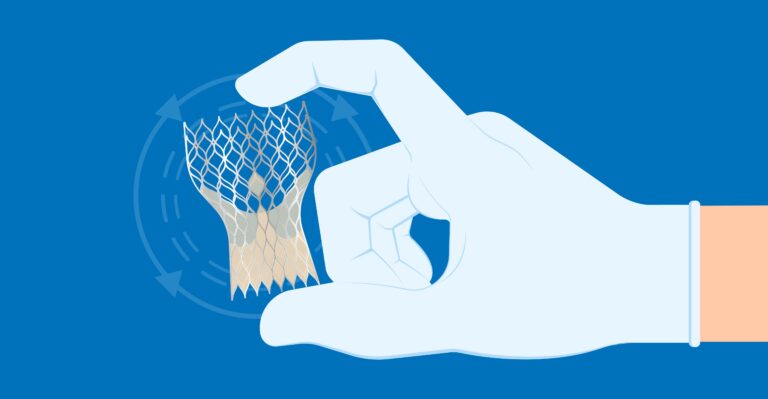
Imagine receiving a new heart valve without open-heart surgery—a remarkable achievement of modern medicine known as transcatheter aortic valve replacement, or TAVR. This procedure involves advancing a collapsible replacement valve through a blood vessel and positioning it inside the diseased valve. Recovery is faster, hospital stays are shorter, and for many older patients with severe aortic stenosis, it has become the standard of care[2]. Yet, a persistent issue has shadowed this technology almost since its inception: the silent formation of tiny blood clots on the leaflets of the new valve.
Seen on CT scans as a thickening that restricts leaflet motion and termed HALT (hypo-attenuated leaflet thickening), these subclinical clots raised alarm bells when first identified. The logical response was to try blood thinners. Indeed, a new randomized trial confirms that anticoagulants can dissolve or prevent these clots. But there is a disturbing catch: the moment you stop the medication, the clots promptly return. And the medication itself may cause more harm than the clots ever would.
What the NOTION-4 Study Actually Revealed
The NOTION-4 trial, a randomized controlled trial—the gold standard of clinical evidence—enrolled 347 patients who had recently undergone TAVR. Of 352 patients randomized 1:1, five experienced screening failures or withdrew consent. Half of the patients were given a single antiplatelet agent alone (typically low-dose aspirin), while the other half received a direct oral anticoagulant (DOAC) for three months, followed by the same antiplatelet therapy.
A crucial detail for clinical practice in this comparison is that nearly all patients in the DOAC arm (98.2%) received apixaban, and 96.1% of the control group took a standard 75 mg of aspirin daily. Randomization was stratified by valve design (supra-annular or intra-annular) and sex to balance biomechanical differences arising from valve anatomy. At the three-month dynamic follow-up, the treatment adherence rate was 81.3% in the DOAC group, compared to 91.5% in the single antiplatelet group. The fact that the main results remained unchanged in an as-treated analysis, which included only patients with full protocol adherence, proved that the observed pattern stemmed from the nature of the pharmacological effect, not from patient non-compliance.
At the three-month follow-up, the results looked promising. Only 12.1% of patients receiving a DOAC had subclinical leaflet thrombosis on imaging, compared to 31.8% in the antiplatelet-only group[1]. This is a striking reduction—the kind that generates excitement at cardiology conferences.
But then the investigators did something critical: they kept following the patients. Nine months after the DOAC therapy was stopped, the patients were imaged again. By the one-year mark, the prevalence of HALT in the DOAC group had surged to 28.3%, while the antiplatelet-only group remained at 32.2%. The difference was no longer statistically significant (p=0.54). The clots had returned.
Then came the safety data, revealing the sobering truth. At 12 months, the composite endpoint of death, stroke, or major bleeding occurred in 8.2% of the DOAC group, compared to just 2.3% in the antiplatelet-only group. While the study was not powered to detect statistically significant differences in these hard clinical outcomes, a nearly fourfold numerical increase in serious adverse events is a signal no clinician can comfortably ignore.
A deeper look into the safety data clarifies the clinical severity: at 12-month follow-up, the stroke rate was 2.9% in the DOAC group versus 0.6% in the aspirin group. More strikingly, disabling strokes (1.8%) and major/life-threatening bleeding (1.2%) were observed exclusively in the group that had used a DOAC. A statistically significant absolute risk increase of 5.9% against the DOAC group was found for the composite primary safety endpoint of death, stroke, or major bleeding (95% CI: 1.2% to 10.6%; p=0.01). In other words, for every 17 patients given a DOAC, even for a short period, one additional major adverse clinical event (death, stroke, or major bleeding) occurred.
Why the Clots Return: The Biology of a Foreign Surface
To understand why a short course of anticoagulation fails to provide lasting protection, one must appreciate what happens when blood encounters a bioprosthetic valve. TAVR valves are typically made from bovine or porcine pericardial tissue mounted on a metal frame. Despite being processed, this tissue represents a foreign surface to the bloodstream[3]. Circulating platelets and fibrinogen are drawn to this surface, initiating the coagulation cascade—the same chain reaction the body uses to seal a wound.
A DOAC works by blocking a specific clotting factor, most commonly Factor Xa, at a critical juncture in this cascade[4]. As long as the drug is in circulation, it suppresses thrombin production and prevents organized clots from forming on the leaflets. But it does not change the underlying biology of the valve surface. The moment the drug is cleared from the body—typically within 24 to 48 hours—the foreign surface is once again met with a fully functional clotting system. The stimulus never went away, so the clots form anew.
This is fundamentally different from treating deep vein thrombosis, for instance, where a clot forms in response to a temporary provocation like surgery or immobility. In TAVR, the provocation is permanent—the valve is there for life. A three-month course of anticoagulation is, biologically speaking, a temporary bandage on a permanent problem.
Moreover, this dynamic process on the valve leaflets is not limited to the lack of endothelialization. Micro-deformations in the TAVR stent frame that can occur during the procedure, failure of the valve to open with full symmetry (regional under-expansion), and vortices created by blood flow in the aortic root (areas of stasis) create a continuous biomechanical substrate for thrombus. This is why the coagulation cascade re-ignites once the drug is stopped. Indeed, an analysis of the transition dynamics between 3 and 12 months showed that while HALT prevalence in the aspirin group remained completely stable at around 32% (58% of patients never developed it, 10% had new onset, and 10% had spontaneous resolution), the DOAC group experienced an explosion of new lesions upon drug cessation, with 20% of patients developing HALT for the first time.
Does HALT Matter Clinically?
This is the question that hangs over the entire field. HALT is a surrogate endpoint—a lab or imaging finding that researchers hope is associated with the outcomes that actually matter to patients, like stroke or valve failure. But the link between subclinical leaflet thrombosis and clinical events remains uncertain. While some observational studies have suggested an association between HALT and stroke risk, others have failed to find a consistent connection[5]. If HALT turns out to be largely benign—a radiological curiosity rather than a clinical threat—the entire rationale for post-TAVR anticoagulation collapses.
The NOTION-4 data also confirmed echocardiographically that these leaflet thickenings on imaging did not impair the fundamental working mechanics of the valve. At the 12-month checks, the mean transprosthetic valve pressure gradients were identical between patients with significant HALT on imaging and those with completely clear leaflets (8.7 mmHg vs. 8.9 mmHg, respectively; p=0.7). No cases of severe structural valve deterioration (SVD) as defined by guidelines were observed in either group, and the need for valve re-intervention was 0% in the DOAC group and occurred in only one patient (0.6%) in the aspirin group. Thus, HALT remains a silent phenomenon, at least in the medium term, that does not compromise the hemodynamic performance of the valve.
The Final Verdict: What These Results Mean for the Future
The NOTION-4 trial is a textbook example of why medicine requires skepticism toward surrogate endpoints. Yes, the DOAC cleared the clots. No, this did not translate into better outcomes. In fact, the safety signal pointed in the opposite direction. For the average TAVR patient without another reason to be on a blood thinner, such as atrial fibrillation, single antiplatelet therapy remains the more defensible strategy.
These findings are not an isolated fluke; on the contrary, they align perfectly with the bitter lessons from the earlier GALILEO trial, which tested rivaroxaban, and the ATLANTIS trial, which examined apixaban. Both large-scale trials clearly showed that while DOACs could keep the valve radiologically clean, the clinical trade-off was an increase in bleeding and mortality. NOTION-4 completes the picture by proving that even a short-term, targeted strategy cannot overcome this paradox. The strong recommendations from current ESC/EACTS and ACC/AHA guidelines to strictly avoid routine oral anticoagulation in TAVR patients without a clear indication like atrial fibrillation, and to proceed with single antiplatelet therapy, are once again placed on an unshakable clinical foundation by these data.
A few important caveats are worth mentioning. This was a moderate-sized trial of 347 patients, not designed to definitively prove or disprove differences in hard clinical outcomes like stroke or death. The safety signal, while concerning, needs confirmation in larger trials. And the findings apply specifically to short-term, time-limited anticoagulation—they do not address whether indefinite anticoagulation would behave differently, though that approach would carry its own significant bleeding risks.
For patients who have recently undergone TAVR or are planning the procedure, the practical message is clear: a short course of blood thinners for the purpose of “protecting the new valve” appears to offer no lasting benefit and may introduce unnecessary danger. The search for the optimal post-TAVR antithrombotic regimen continues, but for now, simpler appears to be safer.
Scientific Sources
- Jørgensen TH, et al. Short-Term Anticoagulant Therapy and Subclinical Leaflet Thickening in Transcatheter Aortic Valves: The NOTION-4 Trial. Journal of the American College of Cardiology. 2026. PubMed: https://pubmed.ncbi.nlm.nih.gov/42669071/
- Mack MJ, et al. Transcatheter Aortic-Valve Replacement with a Balloon-Expandable Valve in Low-Risk Patients. N Engl J Med. 2019. DOI: 10.1056/NEJMoa1814052
- Makkar RR, et al. Subclinical Leaflet Thrombosis in Transcatheter and Surgical Bioprosthetic Valves. J Am Coll Cardiol. 2020. DOI: 10.1016/j.jacc.2020.04.043
- Mega JL, et al. Rivaroxaban in Patients with a Recent Acute Coronary Syndrome. N Engl J Med. 2012. DOI: 10.1056/NEJMoa1112277
- Chakravarty T, et al. Subclinical Leaflet Thrombosis in Surgical and Transcatheter Bioprosthetic Aortic Valves: an Observational Study. Lancet. 2017. DOI: 10.1016/S0140-6736(17)30757-2
Medically reviewed by
Dr. Şekip Altunkan
Dr. Şekip Altunkan is an internal medicine specialist with extensive clinical experience. He trained at Hacettepe University Faculty of Medicine and later served as an Associate Professor in Internal Medicine. He founded and led the Metropol Internal Medicine and Hypertension Clinic in Ankara, pioneering non-invasive Electron Beam Tomography (EBT) cardiac imaging, arterial-stiffness measurement, and nationwide Holter monitoring. He currently practices at his private clinic in Ankara, focusing on hypertension, vascular health, cholesterol, diabetes and heart disease. He has published widely in national and international journals, serves as a peer reviewer for several international journals, and is the author of the book "Questions and Answers on Hypertension."