#longevity_healthy_aging

The Clock That Breaks First: Sleep and Alzheimer’s
Medically Reviewed by Dr. Şekip Altunkan on Nov 20, 2026.
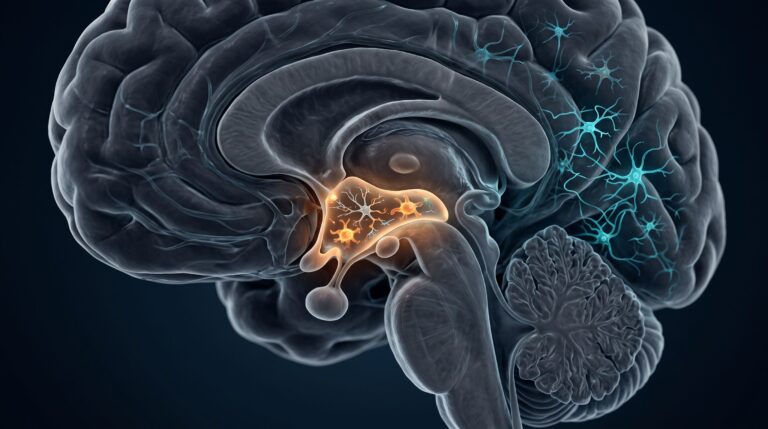
Midsagittal 3D medical illustration of the human brain highlighting inflamed amber microglia and inhibitory neurons within the hypothalamus in Alzheimer's disease. Illustration: Vitalsdaily

Image generated with AI · VitalsDaily

Key Takeaway

Drawing on detailed MRI scans from 458 individuals and single-nucleus gene expression profiling of 614,403 individual brain cells, a landmark human hypothalamic atlas reveals that the brain’s control centers for sleep, stress, and metabolism are exceptionally vulnerable to aging and Alzheimer’s disease. The discovery that the heaviest cellular toll falls upon inflamed immune cells and neurons that orchestrate daily circadian rhythms may finally explain why sleep disruption and dementia are so inextricably intertwined.

The Night Watchman Who Stopped Keeping Time

Consider Ellen, a 68-year-old retired teacher. Her memory appears entirely intact; she still completes the Sunday crossword in fountain pen. Yet her nights have unraveled. She bolts awake at 3:00 AM with her mind racing, only to doze off in her armchair by 4:00 PM. Her appetite has shifted, and her weight has steadily climbed. Her husband remarks that she has simply become an “entirely different sleeper.” No one initially connects these changes to neurodegeneration. Years later, however, the formal diagnosis enters her medical chart: Alzheimer’s disease.

Clinicians encounter variations of Ellen’s story with striking regularity. Disruption of the sleep-wake cycle is remarkably pervasive in Alzheimer’s disease; it frequently precedes measurable cognitive decline and tends to worsen progressively as the disease runs…

Medically reviewed by

Dr. Şekip Altunkan

Dr. Şekip Altunkan is an internal medicine specialist with extensive clinical experience. He trained at Hacettepe University Faculty of Medicine and later served as an Associate Professor in Internal Medicine. He founded and led the Metropol Internal Medicine and Hypertension Clinic in Ankara, pioneering non-invasive Electron Beam Tomography (EBT) cardiac imaging, arterial-stiffness measurement, and nationwide Holter monitoring. He currently practices at his private clinic in Ankara, focusing on hypertension, vascular health, cholesterol, diabetes and heart disease. He has published widely in national and international journals, serves as a peer reviewer for several international journals, and is the author of the book "Questions and Answers on Hypertension."

Share this article