#stroke_thrombectomy

Thrombectomy at 72 Hours: Stroke’s Window Stretches to Days
Medically Reviewed by Dr. Şekip Altunkan on Nov 20, 2026.
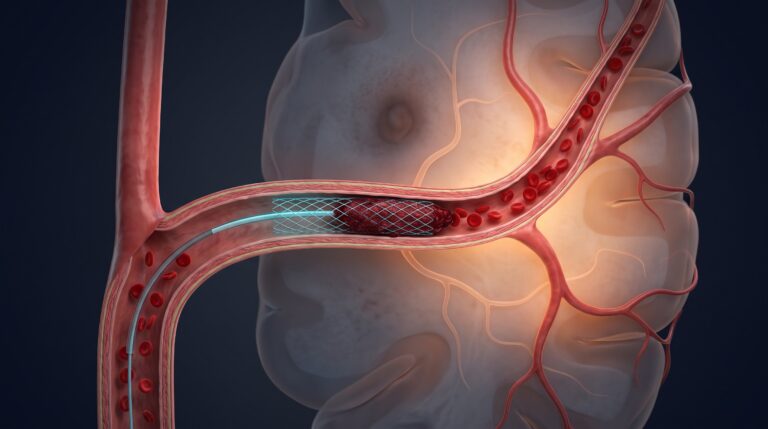
3D illustration of a stent retriever pulling a clot from a brain artery, restoring blood flow to threatened tissue

AI-generated image · VitalsDaily

Key Takeaway

In a randomized trial of 336 patients with a blocked major brain artery who reached care 24 to 72 hours after their stroke began, removing the clot with a catheter led to better recovery at 90 days than medicine alone. That gain came with a 4.8% rate of symptomatic brain bleeding and more deaths, so careful patient selection with advanced brain scans is essential.

The Man Who Waited Out the Weekend

Picture a 66-year-old retired machinist whose speech turns thick on a Friday evening. He blames fatigue and goes to bed. By Sunday morning his right hand will not hold a coffee cup, and his wife drives him to the emergency department. A CT angiogram shows a clot lodged in the main artery feeding the left side of his brain. He is about 40 hours out from the first symptom.

Until very recently, the honest answer for this man was that he had arrived too late for the most powerful stroke treatment we have. A new trial suggests that, for the right patient, the answer may now be different, and it also shows what that answer can cost.

How the Clock Kept Moving

Mechanical thrombectomy…

Medically reviewed by

Dr. Şekip Altunkan

Dr. Şekip Altunkan is an internal medicine specialist with extensive clinical experience. He trained at Hacettepe University Faculty of Medicine and later served as an Associate Professor in Internal Medicine. He founded and led the Metropol Internal Medicine and Hypertension Clinic in Ankara, pioneering non-invasive Electron Beam Tomography (EBT) cardiac imaging, arterial-stiffness measurement, and nationwide Holter monitoring. He currently practices at his private clinic in Ankara, focusing on hypertension, vascular health, cholesterol, diabetes and heart disease. He has published widely in national and international journals, serves as a peer reviewer for several international journals, and is the author of the book "Questions and Answers on Hypertension."

Share this article