Why Blood Pressure Apps Die on the Vine
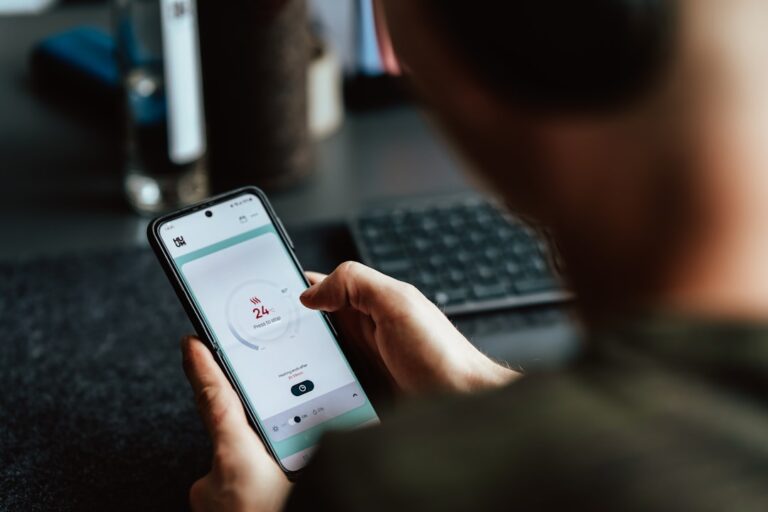
Key Takeaway: A systematic review of 15 qualitative studies reveals that the long-term success of blood pressure management apps hinges not on flashy features, but on trust, usability, cultural relevance, and social support. For digital health tools to evolve from novelties that are downloaded and forgotten into sustainable self-management aids, they must be designed around the complex, real lives of the people who use them.
There’s an App for That—So Why Isn’t It Working?
These days, there’s an app for everything, including managing high blood pressure. Open any smartphone’s app store, and you’ll find dozens of sleek, colorful tools promising to track your readings, remind you to take your medications, and guide you toward a healthier lifestyle. Yet, a predictable cycle repeats with almost uncanny regularity: a patient downloads an app, uses it enthusiastically for a few weeks, and then quietly lets it gather digital dust. The failure isn’t technological; it’s human. The real question isn’t whether we can build these tools. Clearly, we can. The real question is why so many of them fail to hold a patient’s interest beyond the initial phase of excitement, and what it would actually take to change that.
This matters because hypertension is no small matter. It is the single largest modifiable risk factor for cardiovascular disease worldwide, contributing to an estimated 10.8 million deaths annually[2]. Nearly half of all adults with hypertension do not have their blood pressure under control, a statistic that has barely budged despite decades of effective pharmacotherapies[3]. Self-management—the daily grind of monitoring blood pressure, adhering to medications, exercising, and limiting sodium—is where the battle is truly fought. Digital health interventions (DHIs) were supposed to be the reinforcements in this fight. Understanding why they have largely failed to live up to that promise is critical.
What Did Researchers Do?
A research team conducted a systematic review, bringing together 15 qualitative studies that explored the experiences of patients, healthcare providers, and caregivers with digital health tools designed for hypertension self-management[1]. Qualitative research is different from the large randomized controlled trials that often make headlines. Instead of asking, “Did it work?” by measuring a drop in blood pressure, these studies focus on the question, “What was the experience like?” by exploring the lived experience of using these tools through interviews, focus groups, and thematic analysis. By synthesizing the existing body of evidence, this review aimed to identify the recurring barriers and facilitators that determine whether a patient sticks with a digital tool or abandons it.
The Findings: The Human Factors That Make or Break an App
The findings clustered around several interconnected themes, none of which had to do with processor speed or algorithmic complexity.
Usability and design emerged as a foundational element. If an app was confusing, cluttered, or required too many steps to log a blood pressure reading, patients disengaged. This is consistent with broader research on technology adoption, where ease of use is one of the strongest predictors of sustained engagement[4]. For older adults, who make up a disproportionately large segment of the hypertensive population, small fonts, non-intuitive navigation menus, and poor accessibility features were particularly alienating.
Trust and credibility were just as crucial. Patients needed to believe that the information the app provided was accurate and medically sound. Skepticism crept in when an app felt generic, commercially driven, or disconnected from their clinical care. Tools that were endorsed by or integrated with a patient’s own healthcare provider earned significantly more trust. This finding underscores the irreplaceable role of the physician-patient relationship, even in a digital context.
Social support features mattered more than many developers might assume. Managing hypertension is often a solitary effort, and apps that incorporated family involvement, peer communities, or connections to caregivers helped sustain motivation. This aligns with decades of behavioral science showing that social accountability is one of the most powerful drivers of health-related behavior change[5].
Finally, linguistic and cultural relevance was a critical and often-overlooked factor. Apps designed in English with dietary advice centered on Western eating habits failed to resonate with patients from diverse cultural backgrounds. A tool that advises reducing cheddar cheese intake is of little use to someone whose diet is built on rice, lentils, and pickles. The review highlighted that cultural adaptation is not a cosmetic add-on but a structural requirement for equitable digital health.
The Mechanism: Why the Mind-Body-Technology Loop Is Breaking
To understand why engagement wanes, it’s helpful to consider what self-management of hypertension actually demands of the brain. The regulation of blood pressure is a complex interplay of the renin-angiotensin-aldosterone system, sympathetic nervous system activity, endothelial function, and renal sodium balance[6]. But the patient experiences none of this. Hypertension is the proverbial “silent killer,” producing no symptoms until devastating damage is done. This lack of perceptible feedback creates a motivational vacuum. Unlike diabetes, where fluctuations in blood sugar can produce tangible discomfort, hypertension offers no daily reminders of its presence.
A well-designed app could theoretically fill this gap, making the invisible visible by showing trends, celebrating improvements, and flagging concerns. But when the app creates friction of its own—through poor design, irrelevant content, or a lack of human connection—it becomes another chore to be performed in an already overloaded daily routine. The cognitive load of chronic disease management is real, and any tool that adds to it, rather than reduces it, will be abandoned[7].
The Final Verdict: Prioritizing Human-Centered Design
This review offers a constructive critique of the current digital health landscape, and its implications are highly practical. For app developers, the message is clear: start building for the patient, not for the pitch. This requires rigorous user testing with diverse populations, integration with clinical workflows so physicians can see and respond to data, and cultural adaptation that goes beyond translation to true content localization.
For clinicians, the takeaway is that recommending a blood pressure app without vetting its usability and appropriateness is like prescribing a medication without checking the dose. Both the tool itself and its suitability for the patient are crucial.
For patients, these findings suggest that if an app feels frustrating, confusing, or irrelevant, the problem is likely with the design, not with them. Seeking out tools that are endorsed by your healthcare team, available in your preferred language, and simple enough to use daily without friction is a reasonable starting point.
A few key caveats: this review synthesized qualitative studies, which excel at revealing the “why” behind behaviors but cannot measure effect sizes or establish causality. The 15 included studies varied in their geographic setting, population demographics, and the specific digital tools examined, which limits the generalizability of any single finding. Furthermore, qualitative research by its nature reflects the perspectives of those willing to participate; patients who silently abandoned an app and never looked back may be underrepresented.
I have an impression from my own clinical practice: patients tend to use apps that remind them of their medication times most frequently. It’s a fact that such apps increase treatment adherence, and I believe it would be beneficial for more patients to use them.
Reading this study brought a question to my mind: what will be the fate of wearable technologies? At the European Society of Hypertension congress I recently attended in Poland, there were numerous presentations on this topic. Moreover, the companies that produce these technologies were intensely promoting their products at their booths. Undoubtedly, advancing technology makes our lives easier; opposing this progress is both meaningless and incorrect. But how will these technologies be used in real-world patient practice? As noted in this study, will patients use these devices for a while, get their fill of the novelty, and then cast them aside, just as they do with apps? Time will tell the answer to this question.
Still, the collective weight of the findings in this study points in a consistent direction. The technology to help patients manage hypertension exists. What’s missing is the human-centered design philosophy that would make these tools feel less like software and more like support. Until that gap is closed, the world’s most sophisticated algorithm is irrelevant if the patient has already deleted the app.
Scientific Sources
- Motta-Yanac E, et al. Barriers and facilitators to digital health tool adoption for hypertension management: systematic review of qualitative studies. BMJ open. 2026;16(6):e116004. PubMed: https://pubmed.ncbi.nlm.nih.gov/42285575/
- GBD 2019 Risk Factors Collaborators. Global burden of 87 risk factors in 204 countries and territories, 1990-2019: a systematic analysis for the Global Burden of Disease Study 2019. Lancet. 2020;396(10258):1223-1249.
- Mills KT, et al. Global disparities of hypertension prevalence and control: a systematic analysis of population-based studies from 90 countries. Circulation. 2016;134(6):441-450.
- Davis FD. Perceived usefulness, perceived ease of use, and user acceptance of information technology. MIS Q. 1989;13(3):319-340.
- Gallant MP. The influence of social support on chronic illness self-management: a review and directions for research. Health Educ Behav. 2003;30(2):170-195.
- Oparil S, et al. Hypertension. Nat Rev Dis Primers. 2018;4:18014.
- Corbin J, Strauss A. Managing chronic illness at home: three lines of work. Qual Sociol. 1985;8(3):224-247.
Medically reviewed by
Dr. Şekip Altunkan
Dr. Şekip Altunkan is an internal medicine specialist with extensive clinical experience. He trained at Hacettepe University Faculty of Medicine and later served as an Associate Professor in Internal Medicine. He founded and led the Metropol Internal Medicine and Hypertension Clinic in Ankara, pioneering non-invasive Electron Beam Tomography (EBT) cardiac imaging, arterial-stiffness measurement, and nationwide Holter monitoring. He currently practices at his private clinic in Ankara, focusing on hypertension, vascular health, cholesterol, diabetes and heart disease. He has published widely in national and international journals, serves as a peer reviewer for several international journals, and is the author of the book "Questions and Answers on Hypertension."