The D-Dimer Paradox: A High-Sensitivity Test in the Shadow of False Alarms
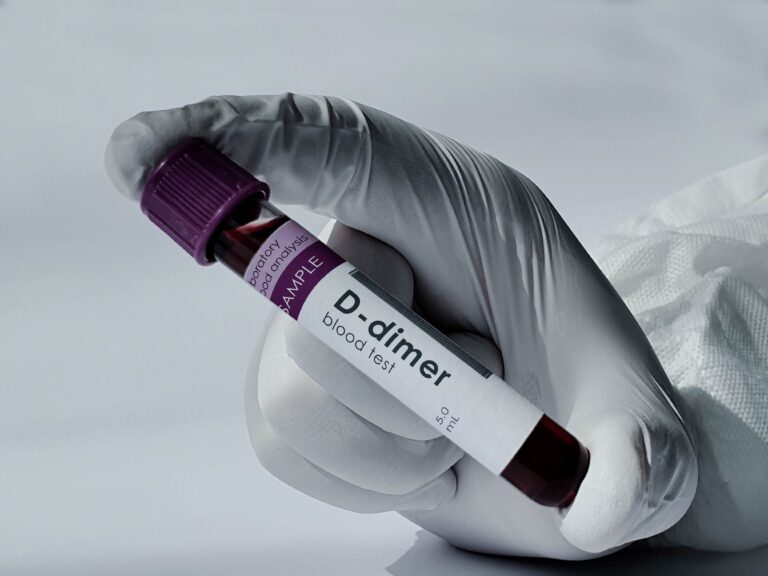
Key Takeaway: The clinical management of D-Dimer represents a profound diagnostic paradox where an exceptional negative predictive value to rule out thromboembolism is counterbalanced by remarkably low specificity, frequently inciting patient panic and fueling an expensive over-imaging epidemic driven by defensive medicine. Pathophysiologically, D-Dimer is not a localized clot detector but a systemic molecular footprint of the fibrinolytic system cleaving cross-linked fibrin polymers that have been covalently bonded by Activated Factor XIII. Consequently, non-thrombotic triggers—including advanced age-related vascular changes, active viral or bacterial infections, occult malignancies, pregnancy, and simple localized bone fractures or minor traumas—are more than enough to activate this cascade and trigger a false alarm. To dismantle this laboratory chaos, modern guidelines demand that clinicians calculate pre-test clinical prediction rules (such as Wells or Revised Geneva Scores) and check the Pulmonary Embolism Rule-out Criteria (PERC) before ordering a blood test. Furthermore, applying an age-adjusted D-Dimer threshold (Patient’s Age multiplied by 10 ng/mL) for individuals over the age of 50 safely prevents unnecessary, high-dose contrast computed tomography scans, reinforcing the core medical truth that D-Dimer is a powerful weapon to rule out disease, not a standalone diagnostic tool to establish one.
Introduction: The Most Misunderstood “Safety Net” in Medicine
One of the greatest paradoxes in clinical medicine is that as a test’s sensitivity increases, its specificity can drop precipitously. The clearest, loudest, and most confusing example of this paradox for both patients and physicians is undoubtedly the D-Dimer test. In outpatient clinics and emergency department rounds, we frequently encounter the following scenario: A patient presents for a routine check-up following simple fatigue, mild leg pain, or a recent viral infection. A D-Dimer test is somehow included in the laboratory panel, and the result returns above the conventional reference range—for instance, at 850 ng/mL. From that moment on, an atmosphere of pure panic consumes both the patient and the inexperienced physician.
Internet searches for terms like “pulmonary embolism,” “deep vein thrombosis,” or “fatal blood clot” send the patient’s anxiety through the roof. The patient and their relatives begin persistently questioning the doctor. This panic quickly transfers to the physician, who begins frantically investigating all possible pathologies that could elevate D-Dimer. Consequently, the medical team is forced to run a battery of exhaustive tests that ultimately yield no actionable diagnosis.
Yet, as a laboratory parameter, D-Dimer is not a specific “clot detector” capable of single-handedly proving the existence of a major intravascular occlusion. It is merely an indirect molecular footprint showing that the body’s fibrinolytic system is working to dissolve a clot. In this installment of The Vault, we will dissect the molecular origins of D-Dimer within the coagulation matrix, analyze the defensive medicine crisis it has generated globally—particularly in the United States—expose its false-positive traps, and explore the clinical management algorithms designed to halt this laboratory chaos.
What is D-Dimer? The Inner Workings of the Coagulation and Fibrinolysis Matrix
To understand why D-Dimer frequently returns elevated and why it causes such widespread confusion, one must examine its biochemical origins within the extracellular matrix. When a vascular injury or inflammatory stimulus occurs in the body, the coagulation cascade is triggered, converting fibrinogen molecules into fibrin strands, which form the primary scaffolding of a blood clot. Initially, these fibrin strands are loose. However, Activated Factor XIII (Factor XIIIa) steps in to covalently cross-link these strands, creating a stable, resilient mesh known as a cross-linked fibrin polymer.
The body cannot keep this clot in place indefinitely. As tissue healing begins or the system seeks to clear the occlusion, a potent enzyme called plasmin is activated. Plasmin begins randomly cleaving that stable, cross-linked fibrin mesh into smaller fragments. The smallest and most stable degraded fragment resulting from this digestion of cross-linked fibrin is called D-Dimer.
The keyword here is “cross-linked fibrin.” The presence of D-Dimer in the blood provides one definitive piece of data: fibrin molecules were manufactured somewhere in the body, tightly bound together by Factor XIIIa, and subsequently cleaved by plasmin. However, the laboratory analyzer cannot tell us where this molecular manufacturing occurred, how large the clot was, or what triggered it. A simple tooth extraction, mild osteoarthritis in a knee, a minor skin laceration, or a silent urinary tract infection is more than enough to turn this factory on and leak D-Dimer into the bloodstream.
The D-Dimer Crisis in America: Defensive Medicine and the “Over-Imaging” Epidemic
A prominent question among patients and healthcare consumers is whether this diagnostic confusion is unique to developing healthcare systems. On the contrary, the capital of this clinical crisis is the United States. Within the US medical framework, D-Dimer represents one of the greatest nightmares for emergency departments and malpractice litigation.
- The Dread of Litigation and Defensive Medicine: The ultimate fear for an emergency physician in the US is missing a pulmonary embolism (PE) in a patient presenting with shortness of breath or chest pain. Missing this diagnosis can result in multi-million dollar malpractice lawsuits that can effectively end a physician’s career. This intense legal pressure has birthed a deep-seated reflex known as defensive medicine. Physicians routinely order D-Dimer tests for patients whose clinical probability of having a pulmonary embolism is under 1%, solely to ensure a “negative test result is documented in the chart” as a legal shield.
- The War Against Over-Imaging (Choosing Wisely): Once these indiscriminately ordered D-Dimer tests return elevated due to advanced age or low-grade inflammation, the physician cannot legally ignore the high value. As a result, the patient is rushed to receive a contrast-enhanced Computed Tomography Pulmonary Angiography (CTPA). Studies show that American emergency departments perform 5 to 7 times more CT scans to diagnose a single pulmonary embolism compared to their European counterparts. This phenomenon is classified as an over-imaging epidemic. Major institutions, including the American College of Emergency Physicians (ACEP) and the American College of Cardiology (ACC), have placed this warning at the very top of their Choosing Wisely campaigns: “Do not order D-Dimer testing in patients with a low pre-test probability without proper clinical scoping, and do not send every elevated D-Dimer straight to a CT scan.” This cycle unnecessarily exposes patients to ionizing radiation, contrast-induced nephropathy (kidney injury), and exorbitant financial burdens.
The “Low Specificity” Trap: Non-Thrombotic Drivers of D-Dimer
D-Dimer is an exceptional tool for ruling out a deep vein thrombosis (DVT) or a pulmonary embolism (PE). If a D-Dimer test is normal, the probability of not having a serious clot is over 99% (it possesses an extremely high negative predictive value). However, when it returns positive, its positive predictive value is remarkably low, and dozens of non-thrombotic etiologies must be considered. The most common clinical traps that elevate D-Dimer without an active macro-thrombosis include:
- Advanced Age (Vascular Aging): As humans age, the intravascular matrix undergoes continuous micro-injuries and low-grade chronic inflammation. Consequently, physiological changes in the vascular bed cause baseline D-Dimer levels to rise naturally with age. Healthy individuals over the ages of 65–70 exhibit a high rate of baseline values exceeding conventional thresholds. Any laboratory evaluation that fails to utilize an age-adjusted cutoff inadvertently misclassifies elderly patients as thrombotic cases.
- Infections and Sepsis: This dynamic became blindingly clear during the COVID-19 pandemic. Any acute bacterial or viral infection triggers systemic cytokine release, activating the coagulation cascade via a process known as immunothrombosis. An elevated D-Dimer is a completely expected physiological finding in a patient dealing with active pneumonia or simple cellulitis.
- Malignancy (Cancer): Malignant cells express tissue factor on their surfaces, keeping the coagulation system in a state of continuous activation (Trousseau syndrome pathophysiology). Occasionally, an unexplained, persistently elevated, isolated D-Dimer can serve as an early warning sign of a hidden tumor (occult malignancy).
- Pregnancy: Gestation is one of nature’s most perfect protective mechanisms; the body upregulates clotting factors throughout pregnancy to prevent fatal hemorrhage during childbirth (inducing a hypercoagulable state). As trimesters progress, D-Dimer levels rise naturally, rendering the classic 500 ng/mL threshold entirely useless.
- Trauma and Surgery: The slightest surgical intervention or tissue contusion triggers localized fibrin production followed immediately by fibrinolysis. Ordering a D-Dimer test on a post-operative patient without an overwhelming clinical suspicion of a clot is a profound clinical error.
“The Guard Dog and the Rustling Leaves”
In my outpatient clinic and during consultations, when anxious patients approach me shaking with a positive D-Dimer report in hand, asking, “Doctor, there is a clot in my blood, am I going to have a stroke or throw a clot to my lungs?” I always use this metaphor to de-escalate their panic:
“Imagine you have a highly sensitive, world-class guard dog protecting your home. Its sole job is to bark if an intruder steps through the front gate. If the dog is lying down silently (meaning your D-Dimer is normal), you know with near 100% certainty that the yard is completely safe. That is the beauty of this test. However, this dog is so incredibly sensitive that it will bark with the exact same ferocity at the rustling of dry leaves in the wind, a cat walking across the fence, or a loud noise from the neighbor’s yard.
Your elevated D-Dimer result is simply the dog barking. Just because the dog barked doesn’t mean you grab a bazooka and blow up your own backyard (meaning you don’t immediately subject the patient to high-dose radiation or unnecessary, aggressive anticoagulation). First, you must calmly look through the window and perform a clinical analysis: ‘Is this barking due to a thief (a real thromboembolism), or is it just the wind blowing a leaf (a mild infection, advanced age, or localized stress)?’ Our duty as physicians is not to panic when the dog barks, but to evaluate the patient’s clinical presentation, respiratory mechanics, and risk scores to determine what actually triggered the alarm. We must treat the whole patient, not just a number on a lab sheet.”
Clinical Management Algorithms to Halt the Chaos
The only way to stop the global confusion and the unsustainable cycle of unnecessary testing driven by D-Dimer is to rigidly apply validated Clinical Prediction Rules before any blood sample is dispatched to the laboratory.
Wells and Geneva Scoring Systems
When a patient presents to an emergency department or clinic with suspected pulmonary embolism or DVT, a Wells Score or Revised Geneva Score must be calculated before drawing blood. If the patient exhibits a “Low Probability,” a D-Dimer is ordered. If it returns negative in this low-probability patient, the workup ends immediately; the patient can return home with the mathematical assurance that they do not harbor an embolism.
Conversely, if the clinical prediction score indicates a “High Probability,” ordering a D-Dimer test is completely pointless. In high-probability patients, a negative D-Dimer cannot reliably rule out a thromboembolism due to the risk of a false negative. These patients must bypass the laboratory entirely and proceed directly to definitive diagnostic imaging, such as a CTPA or lower extremity Doppler ultrasonography.
PERC Kriterleri (Pulmonary Embolism Rule-out Criteria)
Frequently utilized by the American College of Emergency Physicians (ACEP), this rule identifies patients whose clinical probability of an embolism is so incredibly low that it explicitly prohibits ordering a D-Dimer test altogether. Forcing a D-Dimer test on a patient who fulfills all 8 criteria of the PERC rule is a clinical misstep that serves only to invite the trap of a false positive.
Age-Adjusted D-Dimer
This represents one of the finest mathematical solutions implemented to resolve diagnostic confusion in elderly populations. For patients over the age of 50, the traditional blanket threshold of 500 ng/mL is discarded. The new clinical ceiling is calculated using the following formula:
Age-Adjusted Threshold = Patient’s Age x 10 ng/mL
For example, if a healthy 75-year-old patient presents to my clinic with a D-Dimer of 700 ng/mL, old parameters would flag this as “dangerously elevated,” triggering immense anxiety. However, applying the age-adjusted cutoff ($75 \times 10 = 750\text{ ng/mL}$), the result falls safely within normal limits for their vascular age, sparing the patient from an invasive, unnecessary imaging cascade.
In summary, integrating age-adjusted D-Dimer thresholds with validated clinical prediction rules (such as Wells, Geneva, or the YEARS algorithm)—and incorporating a PERC-first flow chart where appropriate—safely rules out venous thromboembolism in low-to-moderate risk populations. This systematic approach safely reduces the 3-month thromboembolic risk to approximately 1% or less, significantly lowering the utilization of advanced imaging. The efficiency and safety of these diagnostic combinations are best validated in outpatient and emergency department settings.
Conversely, in high-risk hospitalized inpatients (e.g., those with active malignancy, acute COPD exacerbations, or undergoing neurosurgical and major orthopedic procedures), the diagnostic performance of D-Dimer varies wildly. In these inpatient cohorts, the test must be interpreted with extreme conservatism, keeping in mind that definitive imaging is frequently required regardless of the laboratory value.
Conclusion: Asking the Right Question to the Right Test
While writing this piece, the daughter of a patient—a chemical engineer by profession—brought in the lab results of her 87-year-old mother for a consultation. I had evaluated the patient three months prior; she managed controlled hypertension and rheumatoid arthritis (RA) via stable medical regimens. At that previous visit, her baseline D-Dimer was elevated around 1110 ng/mL. Applying age-adjustment metrics and factoring in the systemic inflammatory background of her rheumatoid arthritis, I determined that clinical monitoring was the safest course—a decision her family fully supported.
However, during a subsequent follow-up with her rheumatologist, a D-Dimer was ordered routinely, returning at a staggering 3500 ng/mL. This dramatic surge left her daughter looking at me with absolute terror. Facing a value that high, I was clinically obligated to initiate an extensive workup to rule out acute thromboembolism and underlying malignancy. As I began organizing the tests, the daughter suddenly remembered a crucial detail: ten days prior, her mother had fallen at a shopping mall, fractured her metacarpal bone, and had her hand placed in a splint at an urgent care clinic.
I took a deep, relieving breath. The localized inflammation, localized micro-thrombosis, and active bone healing at that fracture site were the exact culprits driving the massive fibrinolytic surge to 3500 ng/mL. I explained this physiological response to her daughter. You might expect that this logical explanation resolved the crisis. On the contrary, I could not easily convince her. Because other physicians had reacted with panic to the raw number, she insisted on absolute certainty. We were forced to proceed with the comprehensive workup, screening for thromboembolism and occult malignancy. Every single test returned negative, confirming that the elevation was entirely due to the healing bone fracture.
This real-world example demonstrates that D-Dimer panic is not unique to the United States; it is a universal clinical challenge. D-Dimer is a lifesaving tool when deployed within the correct clinical scenario. When ordered inappropriately, it traps the physician in a legal labyrinth and throws the patient into an anxiety crisis. Modern vascular medicine and hematology refuse to be hypnotized by numbers on a laboratory panel. D-Dimer is not a tool to establish a diagnosis; it is a tool to definitively solidify the rule-out of a clinical suspicion that has already been discounted by bedside examination. Successful medicine is shaped not by the clinician who orders the most tests, but by the one who knows exactly when to read them.
Our Slogan: “D-Dimer is not a diagnosis of a clot, it is the system’s alarm bell; do not run toward the sound in a panic, calmly locate the true trigger of the alarm.”
Key Clinical Studies & Guidelines Reviewed
- Imberti D. D-dimer testing: advantages and limitations in emergency medicine for managing acute venous thromboembolism. Internal and Emergency Medicine. 2007;2(1):70–71.
- Righini M, Van Es J, Den Exter PL, et al. Age-Adjusted D-Dimer Cutoff Levels to Rule Out Pulmonary Embolism: The ADJUST-PE Randomized Clinical Trial. JAMA. 2014;311(11):1117-1124.
- Kearon C, de Wit K, Parpia S, et al. Diagnosis of Pulmonary Embolism with D-Dimer Adjusted to Clinical Probability. The New England Journal of Medicine. 2019;381(22):2125-2134.
- Lim W, Le Gal G, Bates SM, et al. American Society of Hematology 2018 guidelines for management of venous thromboembolism: diagnosis of venous thromboembolism. Blood Advances. 2018;2(22):3226-3256.
- Kabrhel C, Courtney DM, Camargo CA Jr, et al. Factors associated with positive D-dimer results in patients evaluated for pulmonary embolism. Academic Emergency Medicine. 2010;17(6):589-597.
- Freund Y, Chauvin A, Jiménez D, et al. Effect of a Diagnostic Strategy Using an Elevated and Age-Adjusted D-Dimer Threshold on Thromboembolic Events in Emergency Department Patients With Suspected Pulmonary Embolism: A Randomized Clinical Trial. JAMA. 2021;326(21):2141-2149.
Medically reviewed by
Dr. Şekip Altunkan
Dr. Şekip Altunkan is an internal medicine specialist with extensive clinical experience. He trained at Hacettepe University Faculty of Medicine and later served as an Associate Professor in Internal Medicine. He founded and led the Metropol Internal Medicine and Hypertension Clinic in Ankara, pioneering non-invasive Electron Beam Tomography (EBT) cardiac imaging, arterial-stiffness measurement, and nationwide Holter monitoring. He currently practices at his private clinic in Ankara, focusing on hypertension, vascular health, cholesterol, diabetes and heart disease. He has published widely in national and international journals, serves as a peer reviewer for several international journals, and is the author of the book "Questions and Answers on Hypertension."