Same Cracks in the Vessel Wall, Decades Apart
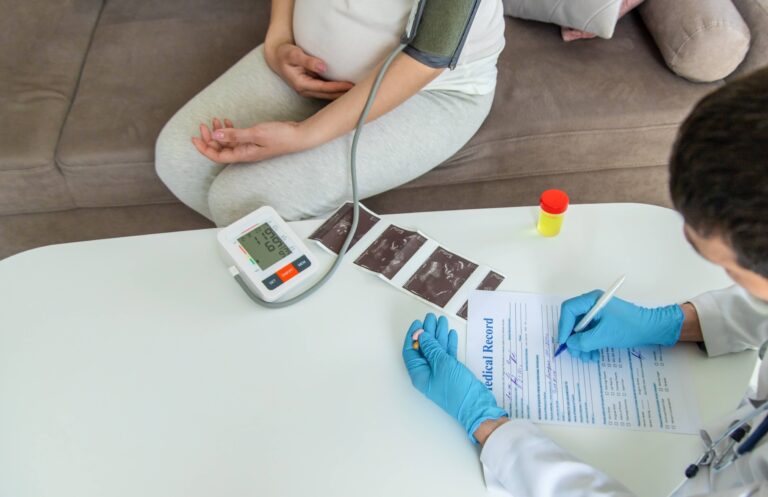
Key Takeaway: A study of nearly 7,000 pregnant women has revealed that genetic variants known to cause coronary artery disease—particularly those that damage the cells lining the interior of blood vessels—also significantly increase the risk of preeclampsia and gestational hypertension. This finding provides some of the strongest evidence to date that dangerous blood pressure disorders during pregnancy and heart disease share the same biological roots, reinforcing the importance of lifelong cardiovascular monitoring for women who experience these complications.
Pregnancy Complications as a Cardiac Warning Sign
Each year, millions of women worldwide face dangerously high blood pressure during pregnancy. This condition is collectively known as hypertensive disorders of pregnancy (HDP). For decades, physicians have witnessed a troubling pattern: women who experience preeclampsia in their twenties or thirties often present to clinics with a diagnosis of heart disease in their fifties. The prevailing question has always been: Does pregnancy simply unmask an underlying vulnerability, or are the two conditions biologically independent? A new genetic study now offers a compelling answer: the same genes that predispose individuals to coronary artery disease also appear to trigger preeclampsia, and they do so by targeting the delicate cells that line the interior of every blood vessel in the body.
Study Methodology
The study utilized data from the nuMoM2b cohort, a large-scale, prospective U.S.-based pregnancy cohort that included 6,782 first-time mothers who were followed after delivery. Researchers constructed polygenic risk scores, which act as a sort of genetic report card, calculating the cumulative effect of small DNA variants known to increase the risk of coronary artery disease. However, the study’s ingenious design was this: they did not lump all heart disease-associated genes into a single pot. Instead, they separated the variants into two categories based on the cell type each primarily affects. One score comprised variants that act on endothelial cells—the thin layer of cells lining the interior of blood vessels. The other included variants that act on non-endothelial tissues, such as liver cells involved in cholesterol metabolism or smooth muscle cells in arterial walls.
Key Findings
The results were striking in their specificity. Each standard deviation increase in the endothelial-acting polygenic risk score was associated with a 1.09-fold increase in the odds of developing a hypertensive disorder of pregnancy[1]. This association was highly statistically significant (p = 0.008). In contrast, no significant link was found between the polygenic risk score derived from non-endothelial coronary artery disease variants and gestational hypertension. The signal came exclusively from genes that disrupt the function of the blood vessel lining.
To move beyond simple association and test for a causal link, the team employed a technique called Mendelian randomization, which uses genetic variants as a natural experiment[2]. This analysis confirmed a causal genetic link between the endothelial-acting coronary variants and both preeclampsia (odds ratio 1.55) and gestational hypertension (odds ratio 1.54). In other words, these conditions were not merely correlated; the genetic evidence pointed to a shared causal pathway.
The Mechanism: Why the Endothelium is the Common Denominator
To grasp the significance of these findings, one must understand the function of the endothelium. This single-cell-thick layer lining every artery, vein, and capillary in the body is far more than passive wallpaper. It is an active organ that constantly produces nitric oxide to relax blood vessels, regulates inflammation, and controls whether blood clots[3]. When endothelial cells become dysfunctional, blood vessels stiffen, inflammation flares, and the clotting mechanism is disrupted.
In coronary artery disease, endothelial dysfunction is the opening act. The damaged vessel lining allows cholesterol to seep into the artery walls, triggering the plaque buildup that ultimately leads to heart attacks[4]. In preeclampsia, the pathology is strikingly similar but plays out on a different stage. During a normal pregnancy, specialized cells originating from the developing placenta invade the uterine arteries, transforming them into wide, low-resistance conduits capable of carrying massive volumes of blood to the growing fetus. This remodeling depends on healthy endothelial signaling[5]. When the endothelium is genetically vulnerable, this remodeling process fails. The placenta becomes starved of oxygen and releases distress signals into the maternal bloodstream, composed of proteins like soluble fms-like tyrosine kinase 1 (sFlt-1). These signals systemically poison the mother’s endothelium, leading to the classic signs of preeclampsia: soaring blood pressure, protein leakage into the urine, and, in severe cases, seizures and organ failure.
What this study reveals is that a woman’s genetic inheritance can silently weaken her endothelium long before the stress of pregnancy is introduced. Pregnancy, with its massive increases in blood volume and cardiac output, becomes the first true stress test of vascular health—years, or even decades, before atherosclerosis would manifest.
Study Limitations
No single study changes medical practice overnight. Although large and well-designed, the nuMoM2b cohort is composed predominantly of participants of European ancestry, which limits how well the polygenic risk scores can be generalized to diverse populations. Polygenic risk scores themselves are still evolving tools; they capture statistical risk across populations but are not perfect predictors for any given individual. And while Mendelian randomization is a powerful method, it relies on assumptions about how genetic variants behave that may not always hold true.
Implications for Women’s Long-Term Health
For clinicians, this study reinforces a reality that professional organizations like the American Heart Association have already begun to recognize in their guidelines: a history of preeclampsia is a cardiovascular risk factor in its own right[6]. It should be considered in the same category as high cholesterol, diabetes, and smoking. For women who have experienced preeclampsia or gestational hypertension, the practical takeaway is clear: this pregnancy complication is not a one-time event but a lifelong signal from your vascular system that demands attention. Steps such as regular blood pressure monitoring, lipid panels, careful attention to weight and physical activity, and open communication with a primary care physician about long-term heart risk are not optional extras but essential follow-up care.
Looking further ahead, this research opens the door to a future where genetic screening before or early in pregnancy could identify women at the highest endothelial risk. This could allow for earlier initiation of low-dose aspirin therapy, closer blood pressure monitoring, and new potential treatments that protect the vascular lining. Long viewed as a disease that arrives without warning and ends with delivery, preeclampsia can increasingly be understood as one chapter in a lifelong vascular story—a story that medicine is finally learning to read from the very beginning.
Scientific Sources
- Li L, et al. Endothelial Susceptibility-Related Genetic Variants and Hypertensive Disorders of Pregnancy-Brief Report. Arteriosclerosis, thrombosis, and vascular biology. 2026;46(7):e324519. PubMed: https://pubmed.ncbi.nlm.nih.gov/42237906/
- Davey Smith G, et al. Mendelian randomization: genetic anchors for causal inference in epidemiological studies. Hum Mol Genet. 2014. PMID: 25064373
- Deanfield JE, et al. Endothelial function and dysfunction: testing and clinical relevance. Circulation. 2007. PMID: 17353456
- Gimbrone MA Jr, et al. Endothelial cell dysfunction and the pathobiology of atherosclerosis. Circ Res. 2016. PMID: 26892962
- Redman CW, et al. Pre-eclampsia, the placenta and the maternal systemic inflammatory response–a review. Placenta. 2003. PMID: 12842410
- Mosca L, et al. Effectiveness-based guidelines for the prevention of cardiovascular disease in women—2011 update. Circulation. 2011. PMID: 21325087
Medically reviewed by
Dr. Şekip Altunkan
Dr. Şekip Altunkan is an internal medicine specialist with extensive clinical experience. He trained at Hacettepe University Faculty of Medicine and later served as an Associate Professor in Internal Medicine. He founded and led the Metropol Internal Medicine and Hypertension Clinic in Ankara, pioneering non-invasive Electron Beam Tomography (EBT) cardiac imaging, arterial-stiffness measurement, and nationwide Holter monitoring. He currently practices at his private clinic in Ankara, focusing on hypertension, vascular health, cholesterol, diabetes and heart disease. He has published widely in national and international journals, serves as a peer reviewer for several international journals, and is the author of the book "Questions and Answers on Hypertension."