When Bone Marrow Betrays the Heart
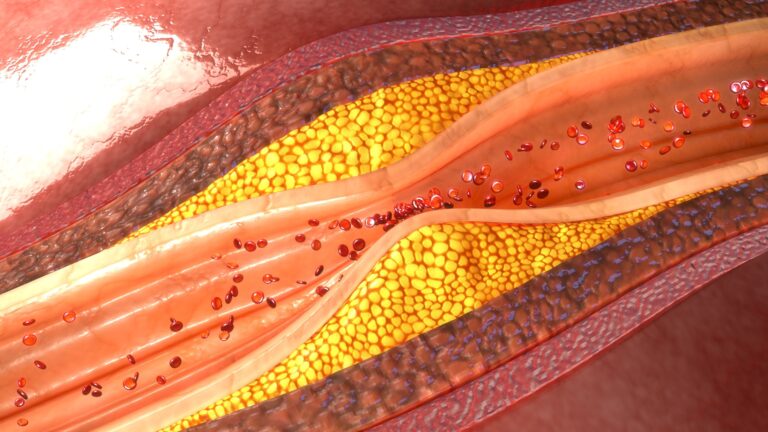
Key Takeaway: A common age-related blood mutation in the TET2 gene prevents atherosclerotic plaques from healing—even when cholesterol is aggressively lowered—because the mutant immune cells lose their ability to clear dead cells within the plaque. A drug called molidustat, which activates a metabolic rescue pathway, reverses this defect in mice, offering a potential new strategy for millions of older adults at high cardiovascular risk.
The Cholesterol Paradox
Even when cholesterol is lowered with the most aggressive methods, some patients continue to have heart attacks. Their plaques refuse to stabilize, and their arteries remain dangerous. For years, this paradox has puzzled cardiologists: Why do certain individuals remain vulnerable even when we drive their LDL to rock-bottom levels with statins or PCSK9 inhibitors? A recently published study reveals a surprising answer, one rooted not in the vessel wall but in the bone marrow, where a common age-related genetic mutation silently sabotages the body’s ability to repair its own blood vessels.
The mutation in question belongs to a phenomenon called clonal hematopoiesis (CH). As we age, stem cells in our bone marrow accumulate random DNA mutations. Occasionally, a mutant stem cell gains a growth advantage and begins to produce a disproportionate share of blood cells, including the immune cells that patrol our arteries. Population studies have shown that CH, particularly involving mutations in the TET2 gene, is present in at least 10% to 20% of people over 65 and is associated with a nearly twofold increase in the risk of coronary heart disease[2]. Until now, the prevailing explanation has focused on increased inflammation. This new research, however, uncovers a far more specific and alarming mechanism.
The Researchers’ Findings
Working with mouse models carrying Tet2-mutant bone marrow—an established model of human clonal hematopoiesis—researchers first fed the animals a high-fat diet to build up atherosclerotic plaques, then switched them to aggressive lipid-lowering therapy. In normal mice, lowering LDL cholesterol triggered the expected response: the plaques began to heal. The necrotic core, a toxic graveyard of dead cells and lipid debris at the center of unstable plaques, shrank, and the fibrous cap overlying the plaque thickened, reducing the likelihood of a rupture that could lead to a heart attack.
In the mice with Tet2 clonal hematopoiesis, none of this occurred. The LDL-lowering therapy failed to reduce the necrotic core area or increase fibrous cap thickness, despite identical improvements in blood cholesterol levels[1]. The plaques remained dangerously unstable. The problem wasn’t a failure to lower cholesterol, but a failure of the plaques to respond to that reduction.
A Defective Cleanup Crew
The critical flaw lay in efferocytosis, the process by which macrophages—the immune system’s cleanup crew—engulf and digest dead cells. Efferocytosis is essential for plaque regression. When cells within a plaque die (as they constantly do), macrophages must swiftly clear the debris. If they fail, the dead cells accumulate, the necrotic core expands, and the plaque becomes a ticking time bomb[3].
Using single-cell RNA sequencing, the researchers analyzed what exactly was going wrong inside the Tet2-deficient macrophages. The results were striking. These mutant immune cells exhibited widespread defects in glycolysis, the metabolic pathway that rapidly breaks down glucose to produce energy. Specifically, the processes of phagocytosis (the physical act of engulfing dead cells) and actin polymerization (the molecular machinery that allows a macrophage to extend its membrane around a target) were impaired. In essence, the cleanup crew was on-site but couldn’t perform the heavy lifting required for the job.
This metabolic clue led the researchers to a key molecule: lactate. Normally a byproduct of glycolysis, lactate was found to play a signaling role far beyond being simple waste[4]. The Tet2-deficient macrophages produced significantly less lactate, and this shortfall was directly linked to their inability to perform efferocytosis. When the researchers supplied lactate externally, the defect was corrected, and the macrophages regained their ability to clear dead cells.
A Drug to Reverse the Damage
The lactate connection pointed to an upstream regulator, HIF-1α, a master transcription factor that drives glycolytic gene expression under stress conditions[5]. The researchers hypothesized that pharmacologically activating HIF-1α could restore lactate production and, therefore, efferocytosis. They turned to molidustat, a HIF-1α activator originally developed to treat anemia. In mice with Tet2 clonal hematopoiesis, molidustat treatment reversed the plaque remodeling defects: necrotic cores shrank and fibrous caps thickened, mimicking the healing response seen in normal animals.
Crucially, the findings extended beyond mice. Analyzing data from the UK Biobank, a massive population database of nearly 500,000 participants, the researchers found that humans carrying TET2 clonal hematopoiesis also have lower plasma lactate levels. This finding provides real-world evidence that the same metabolic defect is at play in people.
Notable Limitations
This is a preclinical study, and while informative, mouse atherosclerosis does not perfectly replicate human coronary disease. Molidustat has not yet been tested in cardiovascular trials in humans, and HIF-1α activation carries theoretical risks, such as promoting angiogenesis within plaques under certain conditions, which could paradoxically make them more unstable. The UK Biobank findings are observational and correlational, not causal. Clinical trials will be needed to determine whether molidustat or similar agents can safely improve plaque stability in people with clonal hematopoiesis.
Implications for the Future
For the estimated tens of millions of older adults worldwide who carry TET2 mutations—most of whom are completely unaware of their condition—this research fundamentally reframes their cardiovascular risk. Lowering LDL cholesterol is necessary, but it may not be sufficient. Their plaques may be resisting healing not because of poor lipid control, but because their own immune cells have lost a critical metabolic function. The identification of molidustat as a potential rescue therapy provides a concrete, testable path forward. If validated in humans, this approach could represent the first targeted treatment for cardiovascular disease driven by clonal hematopoiesis, a condition medicine couldn’t even name until very recently.
Scientific Sources
- Yalcinkaya M, et al. Impaired Glycolysis Leads to Defective Efferocytosis and Impaired Plaque Resolution in Tet2 Clonal Hematopoiesis. Circulation. 2026. PubMed: https://pubmed.ncbi.nlm.nih.gov/42708224/
- Jaiswal S, et al. Clonal Hematopoiesis and Risk of Atherosclerotic Cardiovascular Disease. N Engl J Med. 2017. DOI: 10.1056/NEJMoa1701719
- Doran AC, et al. Efferocytosis in health and disease. Nat Rev Immunol. 2020. DOI: 10.1038/s41577-019-0240-6
- Zhang D, et al. Metabolic regulation of gene expression by histone lactylation. Nature. 2019. DOI: 10.1038/s41586-019-1678-1
- Semenza GL. Hypoxia-inducible factors in physiology and medicine. Cell. 2012. DOI: 10.1016/j.cell.2012.01.021
Medically reviewed by
Dr. Şekip Altunkan
Dr. Şekip Altunkan is an internal medicine specialist with extensive clinical experience. He trained at Hacettepe University Faculty of Medicine and later served as an Associate Professor in Internal Medicine. He founded and led the Metropol Internal Medicine and Hypertension Clinic in Ankara, pioneering non-invasive Electron Beam Tomography (EBT) cardiac imaging, arterial-stiffness measurement, and nationwide Holter monitoring. He currently practices at his private clinic in Ankara, focusing on hypertension, vascular health, cholesterol, diabetes and heart disease. He has published widely in national and international journals, serves as a peer reviewer for several international journals, and is the author of the book "Questions and Answers on Hypertension."