The Echo Report Gap Costing Lives
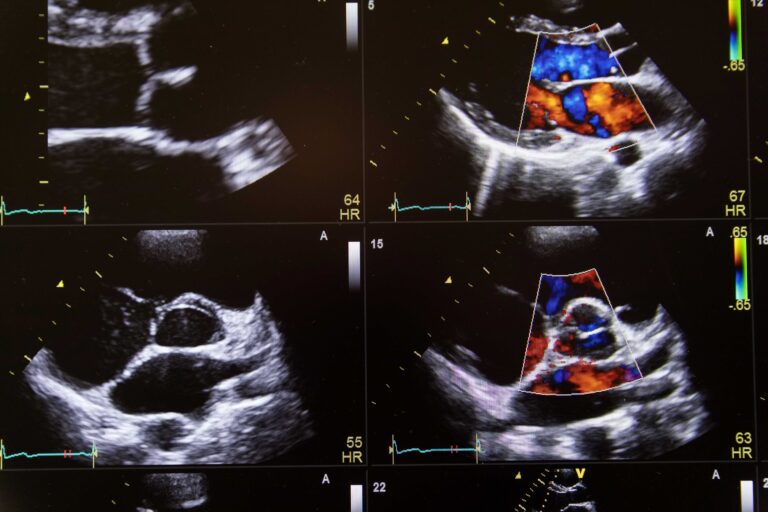
Key Takeaway: A national registry of over 8,000 patients reveals that only about half of those with severe aortic stenosis receive a timely diagnosis, and approximately 40% miss recommended follow-up echocardiograms. Fewer than one in ten echocardiography reports include a clinical recommendation for next steps—a systemic communication failure that could be costing lives.
A Ticking Clock Many Patients Never Hear
Imagine this scenario: A 74-year-old retired teacher mentions to her primary care physician that she gets short of breath walking to the mailbox. An echocardiogram, an ultrasound of the heart, reveals moderate aortic stenosis—a progressive narrowing of the valve that controls blood flow from the heart to the rest of the body. Guidelines indicate a follow-up echocardiogram is needed within a year. But the report is filed in the electronic health record without a single line of recommendation for the next step. No follow-up is scheduled. Two years later, the patient collapses at the grocery store. Her valve disease has become severe, and the window of opportunity for an optimal outcome has narrowed, just like her valve.
This scenario is not hypothetical. According to new data from the American Heart Association’s Target: Aortic Stenosis (Target: AS) registry, it is alarmingly common across the United States.
What the Registry Revealed
The Target: AS registry collected data from 8,097 patients at 58 medical centers nationwide, offering one of the most comprehensive snapshots of how aortic stenosis care actually functions in everyday hospitals and clinics, not in the controlled environment of a clinical trial. The findings are a wake-up call.
In 2023, timely diagnosis—defined as the completion of all necessary evaluations within 30 days of a concerning echocardiogram—occurred in only 54% of patients. By 2024, this rate had shown a modest improvement to 61%; while a step in the right direction, it means nearly four out of ten patients still experienced potentially dangerous delays[1]. The numbers were somewhat better for treatment: among patients with a clear guideline-based indication (a Class I recommendation) for valve replacement, 82% in 2023 and 85% in 2024 received their procedure within 90 days.
However, two other findings were particularly concerning. Approximately 40% of patients with moderate or severe aortic stenosis did not receive timely follow-up echocardiograms, the periodic checks that monitor if the disease is worsening. And, perhaps most strikingly, fewer than 10% of echocardiography reports included clinical recommendations. In other words, the imaging was being done, but the critical step of interpretation—telling the referring physician what to do about it—was almost entirely absent.
At the heart of these diagnostic delays is the challenge of “discordant echocardiography,” which frequently misleads clinicians. In the registry, nearly half (46%) of the 5,821 patients suspected of having severe aortic stenosis had a valve area under 1 square centimeter, yet their measured pressure gradients were low (mean gradient below 40 mmHg). Guidelines mandate further multimodality testing in such paradoxical or low-flow scenarios, such as an aortic valve calcium score or dobutamine stress echocardiography. Yet, the data documented that these tests were never performed in nearly three-quarters (75.5%) of the patients who needed them most. Here’s the stunning implication: in 57% of the patients who did complete further testing, the disease was proven to be truly “severe.” Due to this single missing step, over 600 patients, even just within the centers studied, continued to live undiagnosed in the community with severe valve disease that had actually reached the threshold for surgical or transcatheter intervention.
Why Aortic Stenosis Demands Urgency
To understand why these delays matter, one must grasp the disease itself. The aortic valve sits at the exit of the heart’s left ventricle, the muscular chamber responsible for pumping oxygenated blood to every organ in the body. In a healthy adult, the aortic valve opens to about 3 to 4 square centimeters. In severe aortic stenosis, this opening shrinks to less than 1 square centimeter—forcing the heart to generate immense pressure to push blood through what is essentially a pinhole[2].
For years, the left ventricle compensates by thickening its walls, a process called concentric hypertrophy. But this adaptation has its limits. Over time, the muscle becomes stiff, filling pressures rise, and heart failure ensues[3]. Once symptoms like chest pain, fainting, or shortness of breath appear, the prognosis is grim without intervention. Historical data show that symptomatic severe aortic stenosis has a mortality rate approaching 50% within two years if the valve is not replaced[4].
Modern treatments like transcatheter aortic valve replacement (TAVR) and surgical aortic valve replacement have transformed outcomes for these patients. TAVR, in particular, has offered a lifeline to older, high-risk patients who were previously ineligible for surgery[5]. But these therapies can only help patients who are diagnosed and referred in a timely manner. A valve replacement performed after months of unnecessary delay means months of preventable, progressive heart damage.
The Reporting Gap in Echocardiography
The finding that fewer than 10% of echocardiography reports contain a clinical recommendation deserves special attention. An echocardiogram report that states “severe aortic stenosis” but fails to add “cardiology consultation is recommended for evaluation for valve intervention” is like a lab report that shows a critically high potassium level but doesn’t flag it as urgent. The data is there, but the actionable signal is missed. For busy primary care physicians managing dozens of results daily, the absence of a clear recommendation can translate directly into inaction—not out of negligence, but from a system that fails to communicate urgency.
This communication breakdown isn’t just about the absence of a guiding sentence; it’s also fueled by hemodynamic blind spots in the reports. The stroke volume index (SVI), which measures the heart’s output relative to body surface area, is the only way to catch “paradoxical low-flow” stenosis, where the heart’s contractile strength appears normal but its output is secretly failing (threshold: below 35 mL/m²). Yet, the Target: AS data showed that even when most needed, the SVI was not calculated at all in 35% of echocardiography reports in 2023 and 18% in 2024. When the flow state isn’t defined, the pressure gradient can be misleadingly low; the physician, believing the patient has “mild-to-moderate stenosis,” may extend the follow-up interval to years while the patient rapidly decompensates. When the report reaching the primary care physician lacks both this hemodynamic warning and the explicit guidance recommended by the American Society of Echocardiography—“Further evaluation and cardiology consultation are appropriate”—the diagnostic chain breaks at its first link.
What This Means for the Future
If you or a family member has been told you have aortic stenosis—even a moderate case—this data carries a direct message: be an active participant in your care. Ask if and when a follow-up echocardiogram has been scheduled. Ask if the findings have been reviewed by a cardiologist. Ask what the plan is if the disease progresses.
For health systems, this registry points to concrete, achievable improvements. Standardized echo reporting templates that include guideline-based recommendations can close the communication gap. Automated alerts in electronic health records can flag overdue follow-up tests. Specialized valve clinics—multidisciplinary teams focused on monitoring and managing patients with valve disease—are already showing promise in shortening the time to treatment at centers that have adopted this model.
The cost of missed check-ups is far heavier than one might think. Looking behind the 40% follow-up delinquency rate highlighted by the registry, large cohort analyses from the literature (Kaiser data) prove that this directly impacts survival rates. Compared to patients who receive timely, guideline-concordant follow-up echocardiograms, individuals with moderate aortic stenosis who miss their follow-up have a 24% higher risk of all-cause mortality, which rises to 38% for severe stenosis. Furthermore, for cases that do progress to valve replacement, evaluation by a multidisciplinary “Heart Team” (a joint council of a cardiologist and a cardiac surgeon) is a Class I (the strongest) recommendation in the American Heart Association and ACC guidelines. While the registry’s rate in the 80% range is encouraging, it is clear that referrals are too critical to be left to individual physician initiative. Indeed, recent randomized trials like DETECT-AS and ALERT have shown that simple automated physician alerts (nudges) integrated into electronic systems significantly improve both valve replacement rates and overall survival.
The limitations of this registry should also be noted. The 58 participating centers may not be representative of every hospital in the country, and centers that voluntarily participate in a quality improvement registry may already be more attuned to these issues than non-participating institutions, suggesting the national picture could be even worse. Additionally, data collection workflows and definitions may vary between centers.
Still, the scope of the Target: AS registry—over 8,000 patients, dozens of institutions—makes its central message hard to ignore. Aortic stenosis is a disease where time is muscle, and in the current system, far too much of both is being lost.
Scientific Sources
- Lindman BR, et al. Advancing Quality in the Evaluation, Surveillance, and Management of Aortic Stenosis: A Report From the AHA Target: AS Registry. Circulation. 2026;154(10):892-908. PubMed: https://pubmed.ncbi.nlm.nih.gov/42360276/
- Baumgartner H, et al. 2017 ESC/EACTS Guidelines for the management of valvular heart disease. Eur Heart J. 2017. DOI: 10.1093/eurheartj/ehx391
- Grossman W, et al. Wall stress and patterns of hypertrophy in the human left ventricle. J Clin Invest. 1975. DOI: 10.1172/JCI108079
- Ross J Jr, Braunwald E. Aortic stenosis. Circulation. 1968. DOI: 10.1161/01.cir.38.1s5.v-61
- Leon MB, et al. Transcatheter aortic-valve implantation for aortic stenosis in patients who cannot undergo surgery. N Engl J Med. 2010. DOI: 10.1056/NEJMoa1008232
Medically reviewed by
Dr. Şekip Altunkan
Dr. Şekip Altunkan is an internal medicine specialist with extensive clinical experience. He trained at Hacettepe University Faculty of Medicine and later served as an Associate Professor in Internal Medicine. He founded and led the Metropol Internal Medicine and Hypertension Clinic in Ankara, pioneering non-invasive Electron Beam Tomography (EBT) cardiac imaging, arterial-stiffness measurement, and nationwide Holter monitoring. He currently practices at his private clinic in Ankara, focusing on hypertension, vascular health, cholesterol, diabetes and heart disease. He has published widely in national and international journals, serves as a peer reviewer for several international journals, and is the author of the book "Questions and Answers on Hypertension."